
12 More Reliable Sources of Health Information on the Web

The proliferation of medical information on the web makes it easier than ever for patients to be informed about their health. It’s also easy to be misinformed and confused by page after page of Google results that are often confusing and contradictory.

Last week I posted on Ten Reliable Sources of Health Information on the Web recommended by my healthcare network.

Today, I’m adding to that list:

1.  Health On the Net Foundation HON: Tina Polhman, president of the APS Foundation of America, reminded me of HON, a well-regarded NGO (non-government organization) that introduced a code of conduct for medical and health web sites (HONcode) that has been adopted by some 3,000 websites worldwide. HON also operates a website, @HON with a search engine that searches only HON certified sites.
2.  WebMD: My own doctor suggested I add this to the list. WebMD has a wealth of information on conditions, symptoms, causes, and treatments. It also offers a drug checker and sections on healthy living and family health.

Stroke, autoimmune disease, and brain injury are my own primary areas of interest and I offer a list on information sources on the resources pages of AnneSigmon.com.

A few of my favorites are:

STROKE

3. National Stroke Association

4. American Stroke Association, a division of the American Heart Association

5. Stroke Information from the Mayo Clinic

6. The Internet Stroke Center

AUTOIMMUNITY

7. Autoimmune Disease from Medline Plus

8. American Autoimmune Related Diseases Association, Inc. (AARDA)

9. Autoimmunity and Women’s Health

BRAIN INJURY

10. Traumatic Brain Injury Information Page

11. Traumatic brain injury, The Mayo Clinic

12. The Brain Injury Association of America (BIAA)

You can read more about each of these at:  https://annesigmon.com/resources/

Ten Reliable Sources of Health Information on the Web

Have you ever gone to a doctor’s office armed with information pertinent to your illness that you’ve gleaned from the web, only to have him (or her) do the eye roll that seems to send the message: “I don’t have time for this?”

That may be changing. Everywhere these days, it seems the health care system is stressed. Doctors are pressed for time, visits are getting shorter and less frequent.  It behooves all of us–especially those of us who suffer from chronic illness–to stay informed. Some doctors are realizing that patients can be effective monitors and scouts–if they can fish out the reliable sources from the flotsam of information–and misinformation–that’s floating out there on the web.

In a big departure from eye rolling, my healthcare network (John Muir in northern California) recently issued a list of reliable sources for patients who want to learn more about their health.  I have used many of these for years, with good results.

  1. Centers for Disease Control and Prevention – One of the best government websites on the Internet.  Good source of info on disease prevention and control. Essential (in my view) for overseas travelers. Also covers emergency preparedness, environmental health, occupational safety and health.
  2. Cleveland Clinic Health Information Center – Information on over 900 health topic. Includes podcasts and web chats and health questions answered by physicians.
  3. Familydoctor.org – Articles written by members of the American Academy of Family physicians. Includes a medical dictionary, health calculators, conditions A to Z and more.
  4. Healthfinder – Developed by the US Department of Health and Human Services, Healthfinder links to carefully selected websites from more than 1,500 health-related organizations.
  5. John Muir – Includes multimedia library, health tools and (for local residents) “find a physician,” and calendar of events and classes.
  6. KidsHealth.org – KidsHealth is the most-visited site on the web for information about children’s health that’s “free of doctor-speak.”
  7. Mayo Clinic – Library of information on diseases and conditions, healthy living guides, health tools, treatment decision guides, and an “ask a specialist” feature.
  8. Medline Plus – A gold mine of good health information from the world’s largest medical library. Info on over 800 diseases and conditions, directories, medical encyclopedia, illustrated medical dictionary, drug information, links to clinical trials, interactive health tutorials, and health information in more than 40 languages.
  9. National Cancer Institute – Extensive information on types of cancer, treatments, drugs, statistics, clinical trials. Also has a telephone help line, live online chat, and email.
  10. NOAH: New York Online Access to Health – NOAH provides access to high-quality consumer health information (in English and Spanish). Arranged both alphabetically and by body site, it includes a search a search feature to guide users to the topics they need to see.

The message here is: There are many reliable sources of medical information on the web. It’s up to us, as patients, to keep abreast of the latest developments that affect our particular health situations. That way, we can serve as an extra pair of eyes and ears for our doctors. And, we can be more effective advocates for ourselves and our families.

I’m pleased that my own health network is realizing that and inviting my participation.

What’s been your experience using the web as a source of health information? 

What responses have you had from your doctors?

Do you have other reliable sources not mentioned here?

Traveling with chronic Illness: Stories explore the ups and downs

It’s a pleasure to have four of my stories published over the past few months in three different anthologies. Each story, in its own way, explores the theme of traveling with chronic illness. That’s something I think about often as a stroke survivor and autoimmune patient chained to a steady diet of blood thinners to prevent another stroke.

I was the unlikeliest adventure traveler, having no real experience – and zero physical aptitude – for Indiana Jones style adventuring. All I had was heart, a taste for adventure, and a desire to see the world.  The stories tell what happened then.

Here’s where you can find them:

  • “Bali Shadows” and “Authentication Failed” appear in the travel anthology Wandering in Bali: A Tropical Paradise Discovered
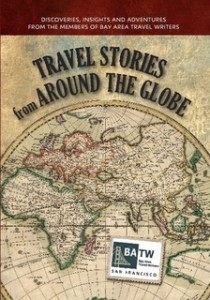
  • “Toboggans and Bouzouki Music” appears in the juried anthology Travel Stories from Around the Globe by Bay Area Travel Writers
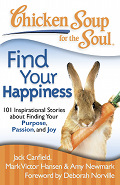
  • “Why I Still Travel to the Wild” appears in the anthology Chicken Soup for the Soul: Find Your Happiness, 101 Stories about Finding Your Purpose, Passion, and Joy

Here’s a link to purchase the books: http://bit.ly/Nj0fAF

And here are a few excerpts:

“Having flunked jump rope in seventh grade, having washed out of college PE, no one–least of all me–could have predicted that I’d marry an intrepid adventure traveler and follow him on wild jungle treks across crocodile infested rivers … I was new to exotic travel, tentatively following (my husband) Jack’s lead. In the years since, Jack and I had slogged through jungles and deserts on six continents. We’d tracked leopards in Botswana and grizzlies in Alaska. Bali would be an easy trip down memory lane. Now, my only fear was for my health.”

(Excerpt from “Bali Shadows”)

“I was different now: I’d had a stroke at forty-eight, a cataclysm that left me unemployed, memory-challenged, dependent on scary-high levels of blood-thinner, particularly vulnerable wherever medical care was thin.”

(Excerpt from “Why I Still Travel to the Wild”)

“When I talked about starting to travel again travel–especially to the adventure destinations Jack and I loved–my doctors cautioned me sternly: get plenty of rest, take it easy, avoid overheating, avoid dehydration, infection, accidents and, above all, never, ever hit my head. Adventure travel in my state of health, they seemed to imply, was like a 15-year-old with a learner’s permit competing in the Indy 500.

(Excerpt from “Toboggans and Bouzouki Music”)

Have you ever had qualms about traveling with a chronic illness?


“Bali Shadows” featured in travel e-zine, Passionfruit

I’m excited that my story “Bali Shadows” is featured this month in the fabulous travel e-zine Passionfruit.com, edited by Michele Jin.

I first traveled to Bali 20 years ago “my first-ever trip to the bush, my first-ever overseas trip with Jack, a month after he slipped an engagement ring on my left hand.”

I returned in 2011, “a different person, one who’d had a stroke at age 48, a cataclysm that left me … memory-challenged, dependent on scary-high levels of blood thinner and particularly vulnerable wherever medical care was scarce.”

“Bali Shadows” reminisces about the romance of the first visit, and explores some of what I’ve learned since, about travel–and about myself.

Hope you’ll have a look.

While you’re there, check out some of the other stories. Laurie McAndish King writes about tracking lions in Botswana – unarmed and on foot; and Colleen Kaleda tells a harrowing tale of getting lost in the night on Hawaii’s Na Pali Trail.

New study: Patients on even low levels of warfarin may not be good candidates for tPA

Patients already taking the blood thinner Coumadin (warfarin), even at low doses, may not be good candidates for the clot-busting drug tPA in the event of a stroke, a new study indicates.

Thrombolysis (treatment with the “clot-busting” drug tPA) in the early stages of a new stroke is often the very best hope a patient has to recover with minimal brain damage. It’s been called a ‘miracle drug,’ because many patients recover with minimal or no loss of function. But tPA comes with a risk: the potential for bleeding inside the brain, which can often be more catastrophic than the stroke.

For that reason, there are strict protocols indicating when tPA should be considered. It must be given within three hours of the onset of symptoms and should not be given to patients for whom the risk of bleeding outweighs the benefits. It’s a long list: patients who’ve had seizures, head trauma, major surgery, who’ve been given the blood thinner heparin.  Patients taking Coumadin (warfarin) have also been excluded if their INR (a measure of how “thin” their blood is compared to a “normal”) is significantly higher than normal.

A “normal” INR is about 1.0. The “therapeutic range” to help prevent blood clots is usually between 2.0 and 3.0.  Patients taking warfarin at below-therapeutic levels (with an INR below about 1.7) have been considered eligible for thrombolysis.

The current study, conducted by the Medical University Innsbruck, Innsbruck, Austria, found that patients taking warfarin at subtherapeutic levels had a significantly higher rate of symptomatic intracranial hemorrhage than other patients.

The study was small, but it included a “meta analysis” of nine past studies. Four of them found a significantly increased bleeding risk among patients with elevated but “subtherapeutic” INR. Five found no increased risk.

So the jury is still out. An editorial in the Journal Neurology summed up our current state of knowledge: “But as the overall findings support the possibility of an increased bleeding risk in patients with warfarin … “clearly, the decision for [intravenous] thrombolysis needs to be taken with caution in these patients.”

For those of us who take Coumadin, it sometimes seems like we’re tip-toeing everyday through a minefield of potentially fatal risks and decisions. Some days I want to stick my head in the sand, ignore the risks and just live my life.  Not smart. The risks are real, and the day may come when we or our families have to face hard decisions like this. That’s why we need to stay informed.  Thanks to Tina Pohlman for sharing this item on the APSFA Facebook site.

Read more at medical news.com.

Migraine and Stroke: What You Need to Know

This month the National Stroke Association is sharing information about migraine and stroke, including an article from the Better Health Channel on how to tell the difference between the two.

I had mild migraines (with aura) for 20 years, which I dismissed as a mere annoyance. Until I had a stroke at 48, and learned (too late) that migraines are a symptom of the clotting disorder antiphospholipid syndrome (APS), which was the cause of my stroke.

“Migraine and stroke have many symptoms in common,” says Tina Pohlman of the APS Foundation of America, “but there are also important differences.”

People need to know the difference between migraine and stroke. They also need to know that people who have migraines with aura have a much higher risk of stroke.

Recent research shows that migraine is an important risk factor for stroke.  Women who suffer from migraines with aura (visual disturbances such as flashing dots or blind spots) can be four or five times more likely to suffer a stroke.

But, according to Steven J. Kittner, M.D., director of the Maryland Stroke Center, “risk factors are cumulative.”

For example, women who take even a low-estrogen birth control pill are twice as likely to have a stroke than those who don’t. If they also suffer from migraines, their risk of stroke catapults to eight or ten times normal. That is exactly what happened to me.

For people who have high blood pressure or diabetes (which thankfully I did not) the risks are even higher. I’d call them astronomical, but that’s just me, looking at stroke risks from the other side, knowing that, if I’d known more, my stroke might have been prevented.

Here’s more on the link between migraine and stroke, from MSNBC.

Get the scoop on APS, the clotting disorder than caused my stroke

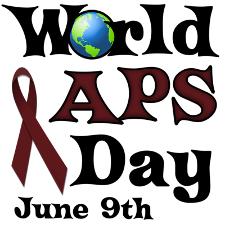
I was slammed out of the blue ten years ago by a stroke that could have been prevented if I’d know the facts. Don’t let that happen to you or someone you love. Today, June 9, is APS awareness day – APS, the acronym for Antiphospholipid Syndrome, the blood clotting disorder that caused my stroke. It’s a great day to start learing the facts.

I remember feeling like the doomed heroine of a bad sci-fi when I first learned the cause of my stroke – an unpronounceable, incomprehensible disease: ‘Antiphospholipid Syndrome,’ or APS. I’d never heard of APS. Nobody I knew had ever heard of APS, even most of my doctors had never heard of APS.”

 APS can be life threatening.

Here are the facts:
• APS is a blood clotting disorder. In patients with APS, the body releases antibodies that cause the blood to clot when it shouldn’t
• As a result, APS is a common cause of miscarriage, blood clots in the legs (deep vein thrombosis), the lungs (pulmonary embolism), heart attack, and stroke.
• It’s also an autoimmune disease. Like lupus and other autoimmune diseases, APS can “flare” at times, causing weakness, fatigue, achy muscles and joints, especially when we’re are tired or stressed.
• APS is sometimes found in conjunction with other autoimmune diseases, particularly as lupus.

You may not have heard about APS, either, but you need to know.

Here’s why:

• One third of strokes occurring in people under 50 are due to APS. Mine was one of those.
• Estrogen in the form of birth control pills and hormone replacement–perfectly safe for most women–can be deadly for women with APS.
• It’s estimated that 15-20% of blood clots in large veins (deep vein thrombosis, including pulmonary embolism) are caused by APS.
• Some 10-25% of women with recurrent miscarriages have APS. If properly diagnosed and treated, many of them can have healthy full-term babies.
• APS is a major women’s health issue: 75-90% of those affected by APS are women
• APS isn’t rare. It’s estimated that one to five percent of the general population has APS.

That’s about two to six million women, comparable to the number of women living with cancer.

Awareness is growing. When I started trying to research APS in 2002, shortly after my stroke, the only information I could find was a booklet from the Hughes Foundation in England and Medline articles heavy on doctor-speak.

My resource page  has further information about APS. Even more information is available from  the APS Foundation of America as well as trusted medical sites like the Mayo Clinic, the the National Institute of Neurological Disorders and Stroke (NINDS), and genome.gov. APS now even has its own Wikipedia page.

There are also several on-line support groups:  the Antiphospholipid Syndrome International Support Group (APLSUK) based in the UK, and APS-Syndrome, both run through YAHOO, and the  support forum sponsored by the APS Foundation of America.

Be informed and share information about APS with the women in your life.

New travel anthology explores Bali’s tropical paradise

I’m excited to be part of the luscious new travel anthology Wandering in Bali: A Tropical Paradise Discovered, a collection of stories from the land of frangipani, myth, and mystery. Don’t miss our two book launch events:



  • Saturday, June 9, 7 pm at Book Passage Corte Madera: 51 Tamal Vista Blvd., Corte Madera, CA 94925 (415) 927-0960
  • Monday, June 11, 6 pm at Book Passage, San Francisco Ferry Building

Both events are free and open to the public.

Two of my stories “Bali Shadows” and “Authentication Failed” join twenty other stories and poems, some mystical, some funny, some terrifying–each in a different, highly personal voice. From computer glitches to shadow puppets, temples, Balinese feasts, classical music and dance, I and my fellow writers sample and share the multiple faces of Bali.

Sitting on the lanai, I remembered our first day there: the air heavy with the fragrance of frangipani and promised rain … the thrumming of an afternoon downpour on our thatched roof … the sound of sawing cicadas and the whoop of a kingfisher diving in the gorge.”

The buzz on Wandering in Bali:
“For centuries, Bali has drawn souls from east and west to its natural beauty, mystical spirituality, and captivating arts. This collection of stories, poems, and photographs offers multiple windows from which to view this engaging place, all presented with rhythms and moods as melodic as the sound of the gamelan.”
—Larry Habegger, Executive Editor, Travelers’ Tales Books

“Like renting a frangipani-scented hut, kicking back and sharing the sensory wonderland that is Bali with a bunch of your fast friends—if your friends knew how to tell really good stories.”
—Spud Hilton, Travel Editor, SF Chronicle

On sale now from Book Passage, the Bay Area’s favorite bookstore: Buy here

Here, in pictures, are some of my favorite memories of Bali.

Stroke: It’s time to face up to the horrendous cost

May is stroke awareness month. It’s a time to raise our awareness of the horrendous consequences of stroke and what we can do to reduce them.

Most days, I don’t like to think about stroke and what it cost me. I’d rather get on with my life and focus on what I can still do–be a wife, daughter, sister, grandmother, friend. Speak. Read. Write. Drive. Travel to still-wild places.

Ten years on, I still fight the deficits from my stroke every day–a flighty disorganization, memory like a sieve, a discoordinated hand with almost no feeling–but I lead a full and interesting life. Most people say they have no idea I’ve had a stroke. I hide it well.

Most stroke survivors aren’t nearly so lucky.

The Cost

It’s easy to get lost in statistics:

  • Almost 800,000 strokes each year in the US and nearly 140,000 deaths
  • Stroke is the No. 4 cause of death in the US, behind heart disease (with which it is closely linked) cancer, and respiratory disease .
  • Stroke is one of the top causes of disability among adults in the US.
  • More than five million Americans are living with the effects of stroke.

But what does this really mean?

My Uncle O.W.

More than twenty-five percent of stroke victims die within a year of their first stroke. Fifteen percent die within a few days or weeks. That was O.W., my uncle (by marriage), a husband, father, and brilliant mathematician. He died within a week of suffering a devastating hemorrhagic stroke. Multiply his story by 187,000.

Ten percent of stroke victims require care in a nursing home or other long-term care facility. There are 80,000 of those each year.

Jack's Uncle Jim

Forty percent of stroke victims are so impaired that they require special care. That was another uncle,  of my husband’s.  Jim, an avid reader,  was blinded by  his stroke. His wife went from new bride to caregiver in a short time.  That’s also my friend, Gerry, a high tech marketing and product manager until his stroke forced his retirement. Now, he stays home, unable to drive, while his wife works.  Multiply their stories by 300,000 each year.

Me, resting with my kittens

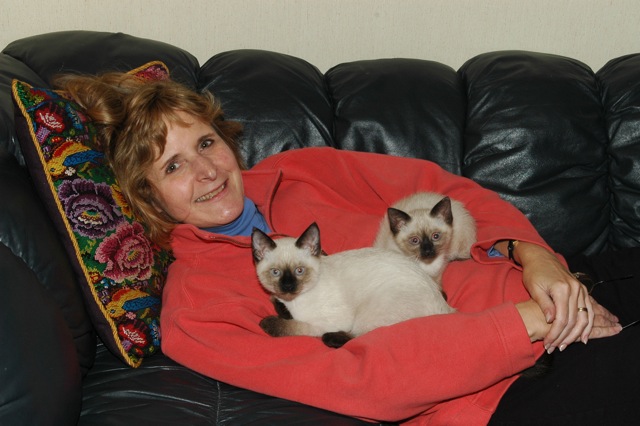
Twenty-five percent of stroke victims recover with minor impairments. That’s me. Lucky with only “minor” deficits, but I am still one of the seventy percent unable to return to their previous jobs. I can’t figure out the tip on a restaurant bill or sew on a button. Multiply my story about 187,000 every year.

A still luckier lucky ten percent of stroke victims recover almost completely after their strokes. I haven’t met any of those yet, but there are 80,000 each year.

A single year’s stroke victims could populate a city the size of San Francisco. But wait: it would need a much larger population to accommodate all the caregivers.

A city of stroke survivors–five million of us–would be the second largest city in the US, behind only New York.

Think about it and do all you can to stop stroke.

Next: What you can do.

i-Pad Apps Help Stroke Patients

Losing the ability to communicate well is one of the most devastating effects of a stroke. It was to me, when I had a stroke in 2002.

One day at the drugstore, shortly after my discharge from the hospital, the pharmacy clerk asked, “Is that Anne with an “e” or without?”

I hesitated, confused by the glaring fluorescent lights, the garish banners, the rows upon rows of remedies shelved in flashy cardboard boxes.

“Well, Don’t you know how to spell your own name?” she asked. A pimply teen aged boy in too-big jeans snickered in line behind me.

Heat crept up my neck. I wanted to disappear behind the shelf of diet aids–either that or slam them both over the head with a giant orange tub of fiber supplement.

Excerpt from Scrambling Back:One Woman’s Quest to Return to the Wild After Stroke and Autoimmune Disease

After my stroke, I was lucky to have a good speech therapist, but the only “electronic aid” I had to draw on was a tape recorder.

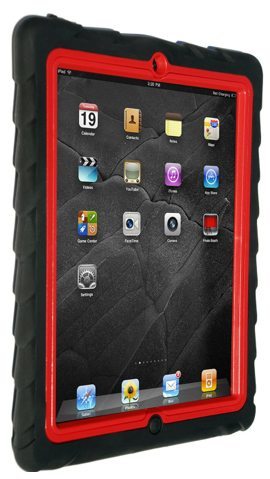
How things have changed in ten years! Now there are a variety of tablet apps–most so far for the i-pad–that are getting good reviews from patients and therapists.

“Apple’s iPad has helped to make life much better for stroke patients whose speech has been impacted,” one hospital rep said recently.

If you or someone you know has had a stroke, you might want to look into them.  I know I would.

Below are links to information and reviews on i-Pad communications apps.

Have you used any i-pad apps to aid in stroke recovery?