Zombies – in a Bali Paradise?

Don’t miss  Linda Watanabe McFerrin’s new story “Bali Belly and the Zombie Apocalypse,” up today on World Hum, the best travel-zine in the Ethernet.

Linda spins a spooky tale that will make you rethink your travel medicine bag. She proves, once again, that old travel-writers’ saw: Anything that doesn’t kill you is  fodder for great story-telling.


Linda also organizes magical travel experiences that generate bewitching books-full of stories, as well as  memories to last a lifetime.

I was on Bali last year with her fabulous group of Wanderland Writers.  Her World Hum story brings back one of my own favorite memories:   a visit to master mask-maker Ida Bagus Anom Suryawan. In addition to carving masks–to international renown–Anom is  a wood carver,  mask dancer, and puppeteer. His workshop, Astina, is in the village of Mas near Ubud.

http://bit.ly/Kpw72x


These scenes from his shop make me think zombies aren’t far behind:


I couldn’t resist the allure of remembered adventure. The mask below now hangs on my porch.

Stay tuned for more stories from Bali in the forthcoming anthology Wandering in Bali: A Tropical Paradise Discovered.

Bali in 2011. Next up, Paris. I’ll be along for that mystery tour as well. Can we expect a zombie lurking in the basement of the opera house?


Photos by Anne Sigmon

Blood thinners in the Jungle? Am I Crazy?


Am I Crazy? As an autoimmune patient with APS, as a stroke  survivor on blood thinners, people sometimes ask why I travel to places teeming with opportunities for disaster.

“Places where medical care is thin, the water is often unsafe and the food chancy; places with infectious diseases, malarial mosquitoes, venomous snakes and the wildest of animals; some places where the locals are just a few generations past headhunting.”

I have asked myself that question, many times, most recently when I set out for a month of temple climbing in India with my knee swollen and braced a week after suffering a “spontaneous” bleed.  Just one of the aggravating hazards of a life on blood thinners. I answered my own question–Why go?– in an essay titled “Why I Still Travel to the Wild,” and wrote about it again yesterday in my travel blog JunglePants.com.

My essay was published in the anthology Chicken Soup for the Soul: Find Your Happiness, available at bookstores and on-line. I hope you’ll check it out.

Why venture to the wild?

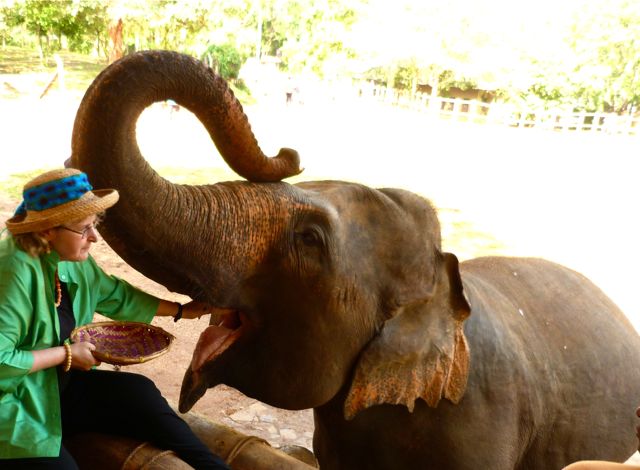
The photos below provides a hint about why I venture afar.

For another perspective, read famed travel writer Paul Theroux’s  eloquent essay about the siren pull of travel in  New York Times, “Why We Travel in Turbulent Times.”

Why do you travel?

Sri Lanka–Feeding times for toddler elephants
China–Frisky pandas at the Panda Research Center near Chungdu

Don’t Miss This Nov. 14 Book Party Celebrating All Things Wild

Anne in Guatemala


It’s a jungle out there and I just can’t get enough of it!

Come help me celebrate publication of my story “Why I Still Travel to the Wild” at a book party sponsored by Left Coast Writers. It’s  on Monday evening, November 14, at 6 pm at Book Passage San Francisco store at the SF Ferry Building. (Just one block from Embarcadero BART.)

My story is a reflection on my (some might say stubborn)  determination to continue traveling to remote corners even after my health was compromised by a stroke and autoimmune disease. It’s just out in the  new anthology Chicken Soup for the Soul: Find Your Happiness. 

Join us for wine,  hors d’oeuvres and jungle-y treats plus, reading and a drawing for prizes.  Fellow author Nicole Guiltinan will join me.  It’s free and open to the public. Great opportunity to start your holiday shopping!

Address: Book Passage, 1 Ferry Building, San Francisco, CA 94111    Book Store phone: (415) 835-1020


Twelve tips for avoiding mosquitos–and the serious diseases they carry

Anne & Jack in Botswana

The Australians call them ‘mozzies’–such a cute name–as though mosquitoes were just pesky little creatures that buzz and bite, one of the minor annoyances of venturing off the beaten track. I used to think of them that way, too, until I started traveling to the tropics and meeting people who’d had malaria, dengue fever (its other name–breakbone fever–gives an idea of the pain involved), Japanese encephalitis and its offshoot, West Nile virus.

These diseases are bad news for even the healthiest of travelers. The stakes are even higher for me, an autoimmune patient who takes high level of blood thinning Coumadin.

I’m heading to Bali in September. My trip preparation always included checking with my travel clinic and consulting the CDC to assess the health risks. I learned that there is no malaria on Bali but there is degue fever. There is no prophylaxis other than insect bite prevention. I also learned that dengue-carrying mosquitoes are active during the day, unlike malarial mosquitoes, which usually bit during the dawn/dusk hours.

I’ll need to be extra vigilant about mosquito bite prevention.  Here are the strategies I’ll use.

Twelve Tips  to Prevent Mosquito Bites:

  1. I don’t mess around with mosquitoes in the tropics. I carry (and use) strong insect repellent.  My personal choice is Repel sportsmen formula with 29% deet, which meets the CDC recommendation of at least 25% DEET. It’s widely available in lotion, pump, or spray. I personally prefer the spray in small containers that are easy to carry in my purse and daybag so I always have it handy.
  2. Other options include: Ultrathon (recommened by my traveldoc), a 12-hour repellent (33% DEET) lotion) and Jungle Juice – 98% deet – available in a pump spray at REI
  3. For extra prevention, I use Permethrin clothing spray(also recommended by my travel doc).  It comes in a spray-on formula that lasts for two weeks.  It’s used to treat your clothes before you leave home.  It doesn’t harm the clothes, though I’ve usually only treated casual and outdoor outfits
  4. Long pants and long sleeve shirts are another way to prevent bites and protect from sunburn.  I have several ultra-lite weight “jungle pants” and hiking shirts. Columbia “Bug Shield” and Ex-Officio “Buzz Off” brands are made to be lightweight and insect repellent.
  5. Insect repellant bandanas are offered by Ex-Officio (Insect Shield, Bugs-Away and Buzz-Off. (The Buzz-off bandana is a bit big and hot for my taste)
  6. Everyone traveling in the tropics should sleep under a mosquito net. Many hotels provide them. Be sure to use them (and make sure they are properly closed).  If you’re camping or staying in hotels which may not provide nets, consider taking your own. REI has a selection of lightweight travel nets.
  7.  Wear light colored clothing (mosquitoes are attracted to dark clothing).
  8. Switch to all unscented products to avoid becoming mosquito bait. Mosquitoes are attracted to floral and fruity scents. Never use perfume or cologne. But that’s not enough: also avoid perfumed shampoos, hand creams, soaps, etc.
  9. Sweat attracts mosquitoes, so do the best you can to keep cool and dried off. (Here’s where the bandana may come in handy.) If you’re going to be outside, consider a shower (or at least reapplication of mosquito repellant) after exercising.
  10. Foods high in salt or potassium produce lactic acid, which attracts mosquitoes.  So leave the bananas and pretzels behind on your outdoor picnic.
  11. If you do get bitten (and you probably will), don’t panic and don’t let worry ruin your trip. There are many more harmless mosquitoes than disease carriers. Just reach for the itch medicine and hope for the best. My favorite is After Bite Itch Eraser. Another is Benadryl crème. For more options see: 40 Mosquito Bite Itch Relief Tips
  12. If you do develop symptoms (fever, chills, sweats, headache, nausea, backache, painful joints) don’t delay: seek treatment immediately.

San Francisco Forum on Autoimmune Disease Set for Aug 20

Here’s a great opportunity to learn more about autoimmune disease: a free public forum in San Francisco on Saturday, August 20, at the Westin San Francisco Market Street Hotel. Details at:  http://sanfranpublicforum.eventbrite.com/

Rita Baron-Faust, Author of The Autoimmune Connection, will speak on “Women and Autoimmunity: Making the Connection,” and Virginia. Ladd,  President and Executive Director of  AARDA (American Autoimmune Related Diseases Association), will talk on “What You Need to Know About the Future of Autoimmune Research and Its Impact on Patients.”

The forum is free, but advance tickets are required by registering here.


Can Vitamin D Offer Relief from Chronic Pain?

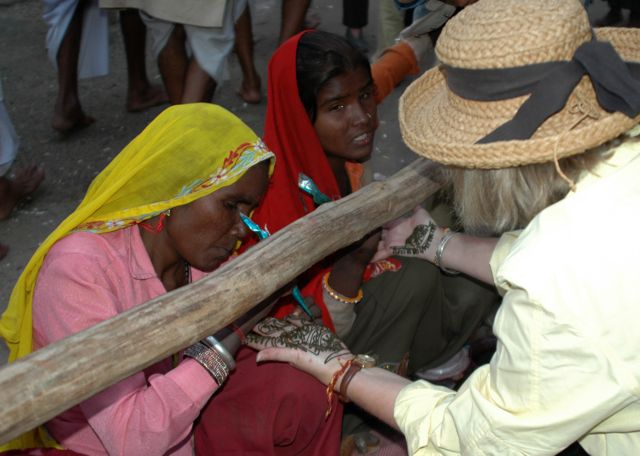
Me, getting my hands hennaed in Pushkar, India


In May, I posted on the benefits of Vitamin D as a way to help reduce the risk of blood clots – as a stroke and APS (antiphospholipid syndrome) patient, that’s  always on my mind.

Now a new study, reported in Internal Medicine News, has linked low Vitamin D to increased musculoskeletal pain.

The study showed that patients in chronic musculoskeletal pain have lower levels of Vitamin D. Thus, the study’s author, Dr. Suzan Abou-Raya, professor of geriatric medicine at the University of Alexandria in Egypt, recommends that all patients with chronic musculoskeletal pain consider Vitamin D supplements.

That could be huge news for autoimmune, fibromyalgia and chronic fatigue syndrome patients who count chronic pain as one of the worst villains of their disease.

I know Vitamin D seemed to help me–a lot!  In May I wrote:

A funny thing happened after I began taking Vitamin D:  I began to feel better. I noticed fewer of those classic autoimmune “flares”–puffy hands, aching joints–days when it hurt just get out of bed; days when I wanted a nap just from the effort of taking a shower. When my D was up, I seemed to have more energy, higher stamina, more enthusiasm.

No one could think of a reason that Vitamin D should reduce flares but, hey, I took it for the blessing it was.

Now we know, maybe I’m not crazy; maybe there is a reason.

Have you had experience with Vitamin D?


Related links:

Low Vitamin D Linked to Chronic Musculoskeletal Pain

faviconVitamin D deficiency risky for APS and autoimmune patients

Alzheimer’s Conundrum: To Test or Not to Test?

There’s a thought-provoking article from Associated Press on the wire this week: Alzheimer’s debate: Test if you can’t treat it?

The gist of the debate is this: with today’s more sophisticated tests–such as the diffusion MRI–it’s easier for doctors to identify brain damage (in the form of plaques) that might suggest someone is developing Alzheimer’s disease. But the treatment options are limited and not terribly effective.

Some doctors urge more and earlier testing, believing it will lead to more effective treatment, both for patients who are shown to be developing Alzheimer’s (by starting treatment earlier) and for those who are not (by allowing both doctor and patient to focus on other possible causes and treatments).

Other doctors say there is no evidence that earlier diagnosis leads to a more favorable outcome and they worry about the costs of widespread early testing. Some patients worry what a test showing brain deterioration, even without symptoms, might mean for future employment, insurance or even senior housing options.

This story hit home for me on two fronts. After a couple of recent episodes that seemed more serious than “senior moments,” my 84-year-old mother is being sent by her doctor for tests this week. And, as a patient with an already-damaged brain from my stroke, I realize that I’m at higher risk for developing Alzheimer’s myself.

I’m squarely in the “I want to know” camp, both for my mother and myself.

My mom lives independently, alone, in a retirement home with good services and a great medical staff. She has resources in place, with help from my sister and me, to navigate occasional choppy waters of forgetfulness and confusion–those “senior moments” that seem to multiply with the years.  But if there’s more to it than that, we all want to know. My sister and I will need to plan for the more intensive care she’ll need. More important, Mom can direct the decisions. If Alzheimer’s is likely, I want Mom to have her say while she still can.

And for me, there’s no question I’d want to know, as early and in as much detail as science allows.

The most terrifying moment of my life came on the morning of my stroke when I felt my mind slipping away, my thoughts scattered like dandelion seeds in the breeze.

“My mind was like cotton candy, everything I’d ever known obscured in a swirl of sticky pink sugar.”

-Excerpt from A Stroke of Bad Luck

I won’t ask to be tested anytime soon, and not without a good reason. My days are already woven with orange-juice-in-the-microwave, hair-gel-on-the-toothbrush moments, courtesy of brain damage from my stroke. These “synapse lapses,” as I like to call them, increase with fatigue, stress, with illness, then taper down when I’m feeling well.  I’ve come to take them in stride. On most days, there’s more clarity than chaos, and that’s enough for now.  But if things should get worse, you betcha I’ll want to know what’s gong on, PDQ.

How about you?

Webinar on Antiphospholipid Syndrome set for Tuesday, September 6

September offers an unusual opportunity to hear the latest on developments in diagnosis and treatment of Antiphospholipid Syndrome (APS) at a free one-hour


webinar set for Tuesday, September 6, at 8:00 pm EDT (5:00 pm PDT).

The discussion, sponsored by the American Society of Hematology (ASH), will include three presentations:

  • Dr. Mark Crowther (McMaster University) – Diagnosing Antiphospholipid Antibody Syndrome
  • Dr. Tom Ortel (Duke University) – Anticoagulant (Blood thinner) Management of Antiphospholipid Antibody Syndrome
  • Dr. Shannon Bates (McMaster University) – Management of Antiphospholipid Antibody Syndrome in Pregnancy

Moderator will be Dr. Wendy Lim, MD (McMaster University).

Learn more about the event on the American Society of Hematology website: http://bit.ly/nqMQH8

The webinar is targeted to physicians but it is open to anyone. I’m planning to attend. I’m especially interested the discussion on Topic #2: Anticoagulation–a particularly vexing topic for APS patients (like me) who’ve already had a stroke.

To attend, register in advance at: http://bit.ly/orJjrE

Updated App for iPhone and iPad helps Coumadin users track Vitamin K

The world’s gone app-happy. It seems there’s an iPhone/iPad/iPod touch app for just about everything these days, even, I’ve just learned, an app to help patients who take blood thinners keep track of their intake of Vitamin K.
For those of us who take Coumadin  (warfarin), Vitamin K is a boogeyman. That’s because K–found principally in dark leafy green vegetables like kale and Swiss chard and spinach that are supposed to be good for us–can inhibit the blood thinning effects of Coumadin.

When I first learned I’d have to be on blood thinners for the rest of my life, I worried incessantly about the K in green vegetables. I imagined little green K monsters coursing through my blood disabling the Coumadin I took to try to keep my blood thin enough to prevent another stroke. I ordered a book called The Coumadin Cookbook–not for the recipes, but for the detailed tables in the back that allowed me to calculate the micrograms of Vitamin K in everything from cucumber (not much) to Swiss chard (a lot). I entered the amounts on a spreadsheet and stuck it on the refrigerator with a magnet.  I pointed to it every now and then, mainly as excuse not to eat the icky collard greens or Brussels sprouts I’d never liked anyway.

I never needed it for much of anything else.

Like many other Coumadin patients, I’d coast for a time snug in my target INR range (measure of blood thinning), until, boom, things started spinning out of control: my INR swung from too low (I worried about another stroke); then too high (I worried about bleeding.) But these wild turnings never seemed related to food. Infections were almost a sure bet to wreak havoc on my INR. Introducing new drugs was often a problem, like antibiotics if I had an infection, or anti-malarials for a trip to the bush.

Perhaps I’m just lucky. Perhaps I don’t like green vegetables enough to make a difference.

But for those who do worry about Vitamin K, the app, by independent developer James Hollender, sure beats a spreadsheet. His Vitamin K 2.4 app allows users to easily find out how much vitamin K there is in over 900 different foods. It’s available now at the itunes app store:  http://bit.ly/qeaNNk

Don’t be a Statistic: Learn the Facts About Antiphospholipid Syndrome—APS


June is APS awareness month – APS, the acronym for Antiphospholipid Syndrome, the blood clotting disorder that caused my stroke nine years ago.

I remember feeling like the doomed heroine of a bad sci-fi when I first learned the cause of my stroke – an unpronounceable, incomprehensible disease: ‘Antiphospholipid Syndrome,’ or APS.

I’d never heard of APS. Nobody I knew had ever heard of APS, even most of my doctors had never heard of APS.

You may not have heard about APS, either, but you need to know. Here’s why:

  • One third of strokes occurring in people under 50 are due to APS.  Mine was one of those.
  • Estrogen in the form of birth control pills and hormone replacement–perfectly safe for most women–can be deadly for women with APS.
  • 15-20% of blood clots in large veins (deep vein thrombosis, including pulmonary embolism) are caused by APS.
  • 10-25% of women with recurrent miscarriages have APS.  If properly diagnosed and treated, many of them will be able to deliver healthy babies
  • APS is a major women’s health issue: 75-90% of those affected by APS are women
  • APS isn’t rare. It’s estimated that one to five percent of the general population has APS.  That’s about two to six million women, comparable to the number of women living with cancer.


Here are the facts:

  • APS is a blood clotting disorder. In patients with APS, the body releases antibodies that cause the blood to clot when it shouldn’t
  • As a result, APS is a common cause of miscarriage, blood clots in the legs (deep vein thrombosis), the lungs (pulmonary embolism), and stroke.
  • It’s also an autoimmune disease. Like lupus and other autoimmune diseases, APS can “flare” at times, causing weakness, fatigue, achy muscles and joints, especially when we’re are tired or stressed.
  • APS is sometimes found in conjunction with other autoimmune diseases, particularly as lupus.

Awareness is growing. When I started trying to research APS in 2002, shortly after my stroke, the only information I could find was a booklet from the Hughes Foundation in England and Medline articles heavy on doctor-speak.  Today, lots of information is available from the APS Foundation of America as well as trusted medical sites like the Mayo Clinic, the National Institute of Neurological Disorders and Stroke (NINDS), and genome.gov.  APS now even has its own Wikipedia page.

There are also several on-line support groups: the Antiphospholipid Syndrome International Support Group (APLSUK) based in the UK, and APS-Syndrome, both run through YAHOO, and the support forum sponsored by the APS Foundation of America.

Be informed and share information about APS with the women in your life.