Getting ready for a trip? A few important health reminders before you go …

My office is awash in yellow stickies this week … Don’t forget! Underlinings, stars and exclamation points decorate every page.

It’s clear there’s more  to remember than my brain can handle. Here are just a few of the admonitions swirling in my damaged  brain … I must pause and pull this together into an at least semi-coherent list:

  • Check  meds carefully. Order refills in plenty of time. Then, count to be sure I have enough of everything to last at least five days longer than I plan to be away. The extra days are a contingency against transportation delays.
  • Always carry my meds with me – never in checked luggage.
  • In addition to my usual medications, pack extra vitamins and remedies for colds or upset stomach that might arise on the road.
  • As a stroke patient on blood thinner, I carry lots of band-aids as well as pressure tape and clotting agents like the Quick Clock sponge.
  • I always get my INR checked (which tells how how well the Coumadin is thinning my blood) a day or two before I leave – several days if I’ve had trouble keeping stable.
  • I try to arrange it so I don’t need another blood test before I return home.  But, I carry a prescription from my doctor for a blood test to measure my INR just in case. If sense things are “off,” I can have it tested on the road.
  • I have to prod myself to wear my medical ID bracelets.

I also remind myself to:

  • Charge cell phone, computer, camera and Kindle the night before I leave
  • Double-check itineraries and tickets
  • Arrange airport transportation
  • Get plenty of rest before I leave. HA!


Do any of you feel overwhelmed by all the details?
12 More Reliable Sources of Health Information on the Web

The proliferation of medical information on the web makes it easier than ever for patients to be informed about their health. It’s also easy to be misinformed and confused by page after page of Google results that are often confusing and contradictory.

Last week I posted on Ten Reliable Sources of Health Information on the Web recommended by my healthcare network.

Today, I’m adding to that list:

1.  Health On the Net Foundation HON: Tina Polhman, president of the APS Foundation of America, reminded me of HON, a well-regarded NGO (non-government organization) that introduced a code of conduct for medical and health web sites (HONcode) that has been adopted by some 3,000 websites worldwide. HON also operates a website, @HON with a search engine that searches only HON certified sites.
2.  WebMD: My own doctor suggested I add this to the list. WebMD has a wealth of information on conditions, symptoms, causes, and treatments. It also offers a drug checker and sections on healthy living and family health.

Stroke, autoimmune disease, and brain injury are my own primary areas of interest and I offer a list on information sources on the resources pages of AnneSigmon.com.

A few of my favorites are:

STROKE

3. National Stroke Association

4. American Stroke Association, a division of the American Heart Association

5. Stroke Information from the Mayo Clinic

6. The Internet Stroke Center

AUTOIMMUNITY

7. Autoimmune Disease from Medline Plus

8. American Autoimmune Related Diseases Association, Inc. (AARDA)

9. Autoimmunity and Women’s Health

BRAIN INJURY

10. Traumatic Brain Injury Information Page

11. Traumatic brain injury, The Mayo Clinic

12. The Brain Injury Association of America (BIAA)

You can read more about each of these at:  https://annesigmon.com/resources/

Ten Reliable Sources of Health Information on the Web

Have you ever gone to a doctor’s office armed with information pertinent to your illness that you’ve gleaned from the web, only to have him (or her) do the eye roll that seems to send the message: “I don’t have time for this?”

That may be changing. Everywhere these days, it seems the health care system is stressed. Doctors are pressed for time, visits are getting shorter and less frequent.  It behooves all of us–especially those of us who suffer from chronic illness–to stay informed. Some doctors are realizing that patients can be effective monitors and scouts–if they can fish out the reliable sources from the flotsam of information–and misinformation–that’s floating out there on the web.

In a big departure from eye rolling, my healthcare network (John Muir in northern California) recently issued a list of reliable sources for patients who want to learn more about their health.  I have used many of these for years, with good results.

  1. Centers for Disease Control and Prevention – One of the best government websites on the Internet.  Good source of info on disease prevention and control. Essential (in my view) for overseas travelers. Also covers emergency preparedness, environmental health, occupational safety and health.
  2. Cleveland Clinic Health Information Center – Information on over 900 health topic. Includes podcasts and web chats and health questions answered by physicians.
  3. Familydoctor.org – Articles written by members of the American Academy of Family physicians. Includes a medical dictionary, health calculators, conditions A to Z and more.
  4. Healthfinder – Developed by the US Department of Health and Human Services, Healthfinder links to carefully selected websites from more than 1,500 health-related organizations.
  5. John Muir – Includes multimedia library, health tools and (for local residents) “find a physician,” and calendar of events and classes.
  6. KidsHealth.org – KidsHealth is the most-visited site on the web for information about children’s health that’s “free of doctor-speak.”
  7. Mayo Clinic – Library of information on diseases and conditions, healthy living guides, health tools, treatment decision guides, and an “ask a specialist” feature.
  8. Medline Plus – A gold mine of good health information from the world’s largest medical library. Info on over 800 diseases and conditions, directories, medical encyclopedia, illustrated medical dictionary, drug information, links to clinical trials, interactive health tutorials, and health information in more than 40 languages.
  9. National Cancer Institute – Extensive information on types of cancer, treatments, drugs, statistics, clinical trials. Also has a telephone help line, live online chat, and email.
  10. NOAH: New York Online Access to Health – NOAH provides access to high-quality consumer health information (in English and Spanish). Arranged both alphabetically and by body site, it includes a search a search feature to guide users to the topics they need to see.

The message here is: There are many reliable sources of medical information on the web. It’s up to us, as patients, to keep abreast of the latest developments that affect our particular health situations. That way, we can serve as an extra pair of eyes and ears for our doctors. And, we can be more effective advocates for ourselves and our families.

I’m pleased that my own health network is realizing that and inviting my participation.

What’s been your experience using the web as a source of health information? 

What responses have you had from your doctors?

Do you have other reliable sources not mentioned here?

Traveling with chronic Illness: Stories explore the ups and downs

It’s a pleasure to have four of my stories published over the past few months in three different anthologies. Each story, in its own way, explores the theme of traveling with chronic illness. That’s something I think about often as a stroke survivor and autoimmune patient chained to a steady diet of blood thinners to prevent another stroke.

I was the unlikeliest adventure traveler, having no real experience – and zero physical aptitude – for Indiana Jones style adventuring. All I had was heart, a taste for adventure, and a desire to see the world.  The stories tell what happened then.

Here’s where you can find them:

  • “Bali Shadows” and “Authentication Failed” appear in the travel anthology Wandering in Bali: A Tropical Paradise Discovered
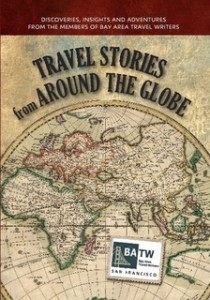
  • “Toboggans and Bouzouki Music” appears in the juried anthology Travel Stories from Around the Globe by Bay Area Travel Writers
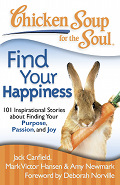
  • “Why I Still Travel to the Wild” appears in the anthology Chicken Soup for the Soul: Find Your Happiness, 101 Stories about Finding Your Purpose, Passion, and Joy

Here’s a link to purchase the books: http://bit.ly/Nj0fAF

And here are a few excerpts:

“Having flunked jump rope in seventh grade, having washed out of college PE, no one–least of all me–could have predicted that I’d marry an intrepid adventure traveler and follow him on wild jungle treks across crocodile infested rivers … I was new to exotic travel, tentatively following (my husband) Jack’s lead. In the years since, Jack and I had slogged through jungles and deserts on six continents. We’d tracked leopards in Botswana and grizzlies in Alaska. Bali would be an easy trip down memory lane. Now, my only fear was for my health.”

(Excerpt from “Bali Shadows”)

“I was different now: I’d had a stroke at forty-eight, a cataclysm that left me unemployed, memory-challenged, dependent on scary-high levels of blood-thinner, particularly vulnerable wherever medical care was thin.”

(Excerpt from “Why I Still Travel to the Wild”)

“When I talked about starting to travel again travel–especially to the adventure destinations Jack and I loved–my doctors cautioned me sternly: get plenty of rest, take it easy, avoid overheating, avoid dehydration, infection, accidents and, above all, never, ever hit my head. Adventure travel in my state of health, they seemed to imply, was like a 15-year-old with a learner’s permit competing in the Indy 500.

(Excerpt from “Toboggans and Bouzouki Music”)

Have you ever had qualms about traveling with a chronic illness?


“Bali Shadows” featured in travel e-zine, Passionfruit

I’m excited that my story “Bali Shadows” is featured this month in the fabulous travel e-zine Passionfruit.com, edited by Michele Jin.

I first traveled to Bali 20 years ago “my first-ever trip to the bush, my first-ever overseas trip with Jack, a month after he slipped an engagement ring on my left hand.”

I returned in 2011, “a different person, one who’d had a stroke at age 48, a cataclysm that left me … memory-challenged, dependent on scary-high levels of blood thinner and particularly vulnerable wherever medical care was scarce.”

“Bali Shadows” reminisces about the romance of the first visit, and explores some of what I’ve learned since, about travel–and about myself.

Hope you’ll have a look.

While you’re there, check out some of the other stories. Laurie McAndish King writes about tracking lions in Botswana – unarmed and on foot; and Colleen Kaleda tells a harrowing tale of getting lost in the night on Hawaii’s Na Pali Trail.

Migraine and Stroke: What You Need to Know

This month the National Stroke Association is sharing information about migraine and stroke, including an article from the Better Health Channel on how to tell the difference between the two.

I had mild migraines (with aura) for 20 years, which I dismissed as a mere annoyance. Until I had a stroke at 48, and learned (too late) that migraines are a symptom of the clotting disorder antiphospholipid syndrome (APS), which was the cause of my stroke.

“Migraine and stroke have many symptoms in common,” says Tina Pohlman of the APS Foundation of America, “but there are also important differences.”

People need to know the difference between migraine and stroke. They also need to know that people who have migraines with aura have a much higher risk of stroke.

Recent research shows that migraine is an important risk factor for stroke.  Women who suffer from migraines with aura (visual disturbances such as flashing dots or blind spots) can be four or five times more likely to suffer a stroke.

But, according to Steven J. Kittner, M.D., director of the Maryland Stroke Center, “risk factors are cumulative.”

For example, women who take even a low-estrogen birth control pill are twice as likely to have a stroke than those who don’t. If they also suffer from migraines, their risk of stroke catapults to eight or ten times normal. That is exactly what happened to me.

For people who have high blood pressure or diabetes (which thankfully I did not) the risks are even higher. I’d call them astronomical, but that’s just me, looking at stroke risks from the other side, knowing that, if I’d known more, my stroke might have been prevented.

Here’s more on the link between migraine and stroke, from MSNBC.

Blood thinners in the Jungle? Am I Crazy?


Am I Crazy? As an autoimmune patient with APS, as a stroke  survivor on blood thinners, people sometimes ask why I travel to places teeming with opportunities for disaster.

“Places where medical care is thin, the water is often unsafe and the food chancy; places with infectious diseases, malarial mosquitoes, venomous snakes and the wildest of animals; some places where the locals are just a few generations past headhunting.”

I have asked myself that question, many times, most recently when I set out for a month of temple climbing in India with my knee swollen and braced a week after suffering a “spontaneous” bleed.  Just one of the aggravating hazards of a life on blood thinners. I answered my own question–Why go?– in an essay titled “Why I Still Travel to the Wild,” and wrote about it again yesterday in my travel blog JunglePants.com.
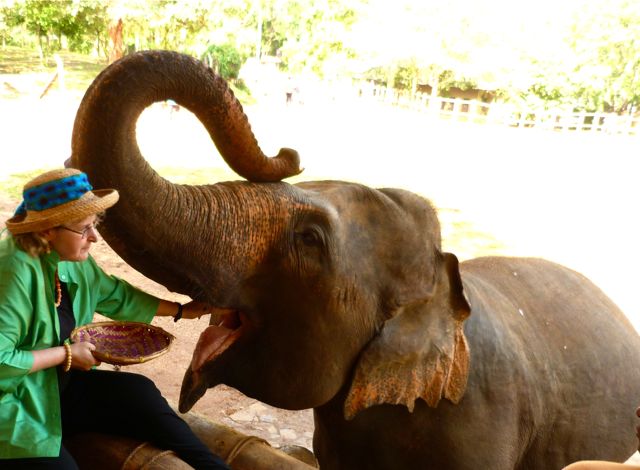
My essay was published in the anthology Chicken Soup for the Soul: Find Your Happiness, available at bookstores and on-line. I hope you’ll check it out.

Why venture to the wild?

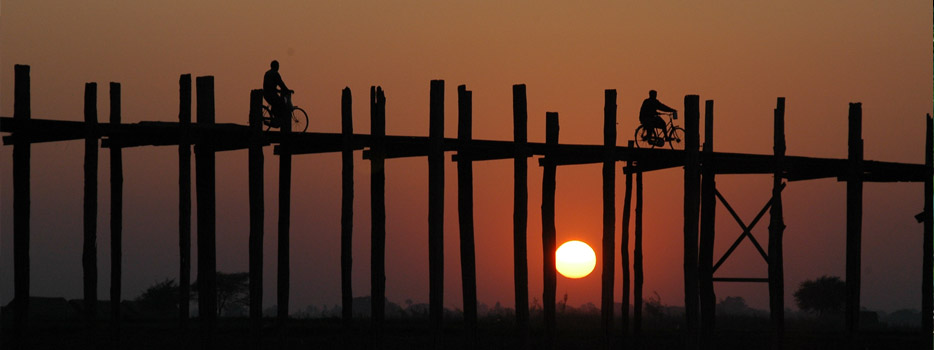
The photos below provides a hint about why I venture afar.

For another perspective, read famed travel writer Paul Theroux’s  eloquent essay about the siren pull of travel in  New York Times, “Why We Travel in Turbulent Times.”

Why do you travel?

Sri Lanka–Feeding times for toddler elephants
China–Frisky pandas at the Panda Research Center near Chungdu