
November 22 Book Party will celebrate new Paris travel anthology

Oh la la, we’ll have Paris in mind on Friday, November 22, when we celebrate the new travel anthology Wandering in Paris with a book party and reading at Montclair’s fabulous bookstore, A Great Good Place for Books.  If you’ll be in the Bay Area that evening, please join us for delicious bites and delightful tales.  The reading is free and open to the public.  I’ll be reading along with editors Linda Watanabe McFerrin and Joanna Biggar and other authors including Cindy Rasicot, Antoinette Constable,  Kitty Hughes, and Laurie McAndish King.  Hope to see you there.

Save the Date:
Paris good cover
Reading and Book Party celebrating publication of the new travel anthology
Wandering in Paris: Luminaries and Love in the City of Light

Friday, November 22, 7 p.m.

A Great Good Place for Books
6120 LaSalle Ave.  (in Oakland’s Montclair Village)
Oakland, CA 94611
Telephone: (510) 339-8210

New Yorker essay shines a spotlight on the scourge of autoimmune disease

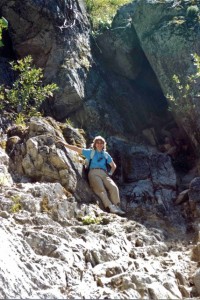
Utah 2013 aes  - 080

For autoimmune patients—and I’m one of them—life sometimes feels like a lonely uphill climb:

“getting sick for no good reason, falling prey to esoteric infections and mysterious skin outbreaks, sliding into spells of lethargy and exhaustion that looked so much like laziness it was maddening.”

Excerpt from A Stroke of Bad Luck and the Potholed Road to Recovery

In her essay “What’s Wrong With Me” published in this week’s New Yorker (Aug. 26, 2013), author Meghan O’Rourke shines a spotlight on what it’s like to live with autoimmune disease. Recounting experiences all too familiar to autoimmune patients, and to me, O’Rourke describes:

  • symptoms ranging from hives to migraines, buzzing in her throat, numbness in her feet;
  • terrible fatigue that made her feel like “a mechanism that moved arduously through the world, simply trying to complete its tasks. Sitting upright at my father’s birthday party required a huge act of will.”
  • her brain often “enveloped in a thick gray fog”
  • a susceptibility to viruses (in her case cytomegalovirus, parvovirus, and Epstein-Barr)
  • a family history sprinkled with various seemingly unrelated illnesses that (she learned later) are all autoimmune in nature.


Like many autoimmune patients, O’Rourke rattled from doctor to doctor for years before any of them believed she had a disease.  “Many clinicians assume that the patient, who is often a young woman, is just one of the ‘worried well,’” she writes. Finally, after six years, she had her diagnosis: autoimmune thyroiditis, often called Hashimoto’s, the same disease that plagued my grandmother.

I missed the the doctor-to-doctor crawl because I had no clue that my body was harboring any kind of illness until I was felled by a stroke caused by my particular autoimmune disease: antiphospholipid syndrome (APS).

O’Rourke writes movingly about what it’s like to struggle with a debilitating condition—autoimmunity—that no one, even specialists, understands well.

The lack of knowledge is shocking to me, considering the magnitude of the problem: The American Association of Autoimmune Related Diseases (AARDA) estimates that as many as fifty million Americans suffer from autoimmunity—a greater number than cancer.  


There are somewhere between eighty and one hundred autoimmune diseases, yet “autoimmune disease is as much of a medical frontier today as syphilis or tuberculosis was in the nineteenth century,” O’Rourke writes. “Some researchers say the number of cases is rising at almost epidemic rates.”

At times during the course of searching for a diagnosis and treatment of her illness O’Rourke questioned her own sanity:

  • “Was I going mad?” she asks.
  • “The worst part of my fatigue, the one I couldn’t explain to anyone—I knew I’d seem crazy—was the loss of an intact sense of self.”
  • “To be sick in this way is to have the unpleasant feeling that you are impersonating yourself.”


“It was a struggle,” she writes, “to do anything—to teach my class, to tidy the house, to go to the gym. My joints hurt, my neck hurt; I had nosebleeds and large bruises up and down my legs. I spend hours everyday unable to work …” This situation is all too familiar to me and other autoimmune patients.

Like many who suffer from autoimmunity, O’Rourke found information and solace in on-line support groups, “people, rich and poor, who were connected by one thing: the inability of doctors to alleviate their symptoms.”   She also turned to diet hoping to mediate her disease. She followed a diet similar to the so-called Paleo regimen: “no gluten, no refined sugar, little dairy” so strictly that, while it did ease some of her symptoms, she spent “at least half of each day” shopping for food, eating, and cleaning up.

“What I had wasn’t just an illness now; it was an identity, a membership in a peculiarly demanding sect. I had joined the First Assembly of the Diffusely Unwell …”

But O’Rourke realized that she didn’t want her life to be defined by illness.

Echoing the concern of many autoimmune patients, she writes: “I worried that I would no longer have friends.”

“The chronically ill patient has to hold in mind two contradictory modes: insistence on the reality of her disease, and resistance to her own catastrophic fears.” Amen to that.

CV1_TNY_08_26_13Drooker.inddO’Rourke’s thoughtful essay has much more to say about autoimmune disease and her experience.  Anyone concerned about the scourge of autoimmunity should read it.  If you’re not a New Yorker subscriber, you can find this issue at newsstands this week, or order a single copy from The New Yorker here.

Two Evenings in Paris—by San Francisco Bay

Paris good coverIf you’re in the Bay Area, come join us as the Wanderland Writers debut the new anthology Wandering in Paris: Luminaries and Love in the City of Light.

We’ll celebrate the book’s publication at two festive launch parties sponsored by Left Coast Writers:
— Monday, August 12, 6 pm at Book Passage at the San Francisco Ferry Building.
–Saturday, August 17, 7 pm at Book Passage Corte Madera.

I’ll be reading along with other contributors. Come join us for good stories, wine, and, of course, a certain je nais se quois.

For a preview, take a look at the travel e-zine Wanderlust and Lipstick.One of my stories from the book, My Phamtom of the Opera, is currently featured there.

http://bit.ly/11K0EU3

Travel Writing Takes Center Stage at Left Coast Writers this Saturday night, June 8

Hear some great travel stories this Saturday night and perhaps win a prize for a piece of your own.
Left Coast Writers presents Our Favorite Travel Writers this Saturday, June 8, at 7 pm in the gallery at Book Passage Corte Madera store.

We’ll share stories and wine and the company of fellow traveling writers. There will even be a contest for the best travel story (1000 words or less), so bring your submissions. The winning story will receive a cash award and publication in the Left Coast Writer online column, Roadwork. But you must be present to win, so mark your calendars.

I’ll read a story from my memoir-in-progress, A Stroke of Bad Luck and the Potholed Road to Recovery.  It recounts my introduction to adventure travel. Hint: I didn’t have to travel far to find more adventure than I bargained for.


Other readers include Cheryl Armstrong, Unity Barry, Antoinette Constable, Kate Crawford, Laurie McAndish King, Diane LeBow, MJ Pramik, and Cindy Rasicot.

Hope to see you there.

Location: Book Passage Corte Madera Store.

51 Tamal Vista.
Phone: 415-927-0960

Genetic Basis Identified for Type of Migraine That Increases Stroke Risk

A research team at the University of California, San Francisco (UCSF), has identified a genetic mutation that is strongly associated with a typical form of migraine headache—migraine with aura.  The research “puts us one step closer to understanding the molecular pathway to pain in migraine,” according to Louis J. Ptáček, senior investigator on the study and a professor of neurology at UCSF. “And, as we come to a clearer understanding, we can start thinking about better therapies,” he said.

The mutation is in the gene known as casein kinase I delta (CKIdelta). You can read more about the research here.

Could that mean that, one day, genetic testing can help identify people who are at increased for stroke? I hope so. I was one of them

I suffered from relatively mild migraines for twenty years before I had a stroke. Though mild, my migraines were the type of migraine the UCSF study describes: with “aura,” that strange visual disturbance that always preceded the headache—blind spots,  zigzag lines or flashing dots that seemed to pulse before my eyes. Once I saw the aura, the rest would be only minutes behind—the pounding headache, over-sensitivity to light and sound, sometimes nausea. I knew women who had migraines so severe they had to stay home from work and retreat to a dark room in agony. Fortunately mine weren’t that bad.

But—though I didn’t know it at the time—even these mild migraines put me at significantly increased risk for stroke.

Women who suffer from migraines with aura (visual disturbances such as flashing dots or blind spots) can be up to ten times more likely to suffer a stroke, depending on other risk factors, according to Dr.  Steven J. Kittner, professor of neurology and director of the Maryland Stroke Center, University of Maryland School of Medicine.

Migraine is also one of the symptoms of the clotting disorder that caused my stroke, an autoimmune disease I never knew I had until I was slammed by a stroke at forty-eight years old. It’s called Antiphospholipid Syndrome or APS.  APS is also sometimes called “sticky” blood because it makes the blood “thicker” and more prone to clots. After my stroke more than ten years ago, I was put on blood thinners for life. I haven’t had a migraine since. It almost seems to me like the headache signaled my sludgy blood struggling flow through my brain. Until it got stuck and formed a clot that caused a stroke that reordered my life.

I want to get the word out about migraine. If you have them, you’re at increased risk for stroke. Do your brain a favor: evaluate any other risks for stroke you have, and try to reduce them.

Risk factors are cumulative,” Dr. Kittner adds.  “Reducing even one risk can greatly lower your chances of having a stroke.”

Read more about the risk factors for stroke here in this list from the National Stroke Association.


Can Statins Help Treatment of Antiphospholipid Syndrome?

New research suggests that statins, traditionally used for cholesterol lowering, could be used in the management of patients with antiphospholipid syndrome (APS), a blood clotting disorder that causes miscarriages, deep vein thromboses, and strokes.

The new research shows that the statin fluvastatin could reduce the inflammatory proteins that are elevated in patients with APS.

The research, by a joint team from the Special Surgery in New York City and the University of Texas Medical Branch, Galveston, Texas, was presented November 12, 2012, at the American College of Rheumatology/Association of Rheumatology Health Professionals  meeting in Washington, D.C.

Read more about the research here: http://bit.ly/UbJ03c

The anti-malarial drug Plaquenil has been used for years in treatment of APS. It helps to reduce the antibodies that are the primary cause of APS patients’ tendency to produce blot clots when they shouldn’t. I’ve been taking Plaquenil for antiphospholipid syndrome for ten years.  After my stroke, my doctor hoped it would help lower my antibodies, but estimated it would take several years. She was right. After about four years, the antibodies started to fall. Not long after that, I noticed I was feeling better, with fewer flares and low-energy days.

It will be interesting to see how well statins work and what the advantages might be.

Do you have any experience with statins?


New Video Explains Antiphospholipid Syndrome

Anisur Rahman

Professor Anisur Rahman of University College, London, discusses the latest thinking on Antiphospholipid Syndrome, its causes and treatments in a 35-minute lecture delivered October 10, 2012, at the Royal Society of Medicine. The easy-to-understand video presentation, with slides, is available here(http://bit.ly/VORFdC)

It’s a great resources to help educate physicians, patients, and their families.
Antiphospholipid Syndrome or APS (sometimes called Hughes Syndrome) is an autoimmune disease that causes blood clots, miscarriages, and strokes. APS is the most common cause of acquired thrombophilia (the tendency to produce blood clots when one shouldn’t  because of a genetic or immune system abnormality).
As Professor Rahman explains, APS is the cause of thirty percent of strokes in people under 50. I was one of those.

If you or anyone you know is affected by APS, this is a great learning tool.

Stroke: Know the Warning Signs Unique to Women

I never thought much about my brain until it went haywire on me.


I’d ignored a few months of irksome forgetfulness–just approaching menopause, I thought; nothing serious. And, with perfect blood pressure, low cholesterol, regular exercise, and a healthy weight, I had no idea I could be at risk for stroke.

I was home alone the morning my stroke hit. The only symptom I noticed at first was a “floppy doll” hand.

“Strange, I thought,” my hand fell asleep in the shower.”

Of course, hands don’t really fall asleep in the shower—a symptom that my thinking was confused.  Other than being unable to control my hand, I felt fine, except for a strange out-of-body sensation, almost like I was a hovering witness looking down on myself. There was this nagging thought that I should call for help, but I felt almost guilty at the thought of rousting someone to come over. After all, I wasn’t in any pain.

Gradually it dawned on me that I couldn’t remember where to find my husband, couldn’t think of a single friend’s name, didn’t know how to work the computer, and finally—when I decided to call emergency, anyway—I couldn’t remember the number­: 911.

I did think to dial “O.” It was only when the operator answered and I tried to speak that I realized: the “words” coming from my mouth were just gibberish. The operator had to trace the call to send an ambulance.

When the paramedic told me I was having a stroke, I didn’t believe him. Of course I’m not having a stroke, I wanted to tell him. Strokes are for the elderly, for smokers, for overweight couch potatoes.  I’m forty-eight years old, fit and perfectly healthy. Perfectly healthy people don’t just wake up feeling fine and then–out of the blue–have strokes.”

But sometimes they do. I did.

Save a brain, of even a life. Make sure you and your loved ones know the most common warning signs for stroke:

  • SUDDEN numbness or weakness of face, arm or leg – especially on one side of the body.
  • SUDDEN confusion, trouble speaking or understanding.
  • SUDDEN trouble seeing in one or both eyes.
  • SUDDEN trouble walking, dizziness, loss of balance or coordination.
  • SUDDEN severe headache with no known cause.


Stroke symptoms may be different in women.  Symptoms typical in women also include:

  • SUDDEN face and limb pain
  • SUDDEN hiccups
  • SUDDEN nausea
  • SUDDEN general weakness
  • SUDDEN chest pain
  • SUDDEN shortness of breath
  • SUDDEN palpitations

A stroke is an acute medical emergency. Know the warning signs —then Call 9-1-1

Has anyone in your experienced stroke? What were the symptoms?

Packing for Paris, Part 2: Electronic “Gear”

Packing for Paris is not just clothes. What about all the electronic “gear” we’ll need for a working trip?

Packing is always hard for me. With memory loss and attention deficit from my stroke, it sometimes feels as though I’m running around the house for days trying to determine what I’ll need. Making lists helps.

Here’s the “gear” list I’ve make for myself for a trip this Fall to Paris and other destinations in the Isle de France. I’ll be staying in an apartment in Paris and, outside Paris, in older hotels in small villages–places that often aren’t geared for the proliferation of electronics that seem so indispensable these days.

But first a word on voltage and plugs …

France operates on 220 Volts and 50Hz on AC, while the US operates on 120 Volts and 60Hz. Voltage used to be a bigger consideration than it is today. Now, most computers, cameras, cellphones and e-readers are dual voltage, so the only adjustment necessary is a plug adapter.

Many US heat-generating appliances–like hair dryers, curling irons, or electric rollers, are not. In years of travel, I’ve found voltage converters heavy to carry, difficult to use, and unreliable, especially in older buildings. Instead, I just make sure all my appliances are dual voltage. Dual voltage hairdryers, curling irons, rollers, travel irons, etc. are readily available at travel stores and travel catalogs like Magellan’s.  With so many electronics–and relatively few outlets in older hotels, I also now carry a compact dual voltage extension cord.

My Electronics Packing List for France

Item Don’t forget
Cell phone Charging cord
Camera
  • Battery charger
  • Extra battery
  • Memory cards
  • Instruction book
  • USB photo loader


Laptop computer
  • Charger
  • Extension cord
  • Mouse if needed
  • Extra batteries for mouse
  • I once carried a mouse pad;  now I just use a magazine
E-reader if you have one
  • Charger


Travel size dual voltage hair dryer
Dual voltage curling brush
Plug adapters, both grounded and Non-grounded
Dual voltage extension cord
Lightweight computer bag to carry all this stuff. I like the Keen Adele.

 Have I forgotten anything?

Packing for Paris, Part 1–Clothes & Accessories

My French friend, Antoinette, has been advising me on what it takes to be stylish in Paris, where she and I will be traveling this fall with a group of friends.

Jungle Pants are out, out, out! As are waist packs, fanny packs, and­–mon Dieu!–tennis shoes.

Instead, we’re to put on bright lipstick, stash all our gear in an enormous black leather purse, and tread the cobble-stoned streets in stylish stiletto-heeled boots and a basic black wardrobe accented with colorful scarves and big jewelry.  I went for the bright lipstick and black bag.  The black wardrobe isn’t a problem. Alas, the stiletto-heeled boots (or heels of any kind) are out for me. I’m opting instead for my comfortable walking shoes and perhaps some low-heeled dress shoes that I’ll drop into that big black purse and slip on at appropriately stylish moments. Done!

Or not.

Here are a few other things I always have I my “kit bag.” They’ve helped me out of a jam more times than I can count:


Item
Rain jacket
Umbrella
Opera glasses – good for viewing stained glass windows as well as opera
Pocket magnifier (credit card size)
Pocket knife and small “leather lady” tool (in checked bag!). Great for wine & cheese picnics
Child-sized scissors
Small travel sewing kit
Glasses repair tool
Backup pair of prescription glasses
Notebook or journal
Extra pens and pencils
Quick dry travel washcloth
Small bar soap
A few travel packets of woolite
Small sandalwood fan
My favorite ginger tea
A few straws of sugar free electrolyte mix to “spike” my bottled water
A small currency conversion chart that I paste on the back of a business card

 When you travel what “special” items do you carry to make life easier?