Angel Song: A Tribute to My Mother

mauve roses #2 - Version 2              Betty Hale Sigmon: 1927-2014.

We had mom to thank for her lovely memorial service last Friday—she planned it herself and left detailed notes. She asked for a vase of mauve roses on the piano, then warned: “Be sure to put a coaster or cloth under the vase to protect the wood.”

Pure Mom. As my sister, Ellen, and I surveyed the preparations, I checked to be sure the cloth was there. It was. I looked up and smiled. “OK, Mom, you can rest easy now; the finish on the piano is safe.”

Faith hope loveMom asked that, at her memorial service, I read the cherished Bible text I Corinthians, Chapter 13, one of the most elegant passages in literature about the power of love. It speaks very personally to me of the love my mother had for the church, for her extended family, for my sister and me, and especially for our Dad. I think it also speaks to her love of music, one of her greatest gifts.

A few days ago, I was chatting with one of mom’s best friends about the music for her memorial. “Well, you know, she was a bit of a perfectionist.” Oh, yes. Most infuriating to my sister and me, as Mom constantly thought ahead, considering the tiny details, making notes—whether of a musical performance, a Girl Scout Cookie sale, a vacation, or wedding—even her own funeral—she was usually right.

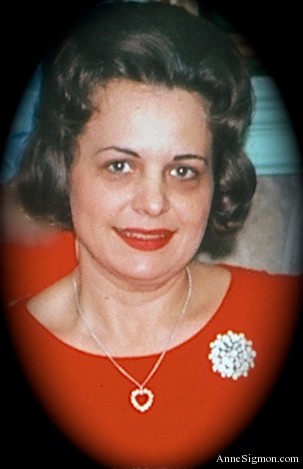
When I tMom Christmas 1964hink about our mother, what she lived for, and what made her happy, I think of three things: family, music, and church, often all at the same time.
I could talk about how she loved family parties with the dining room done up for the occasion. Or how she lead Girl Scout camping trips and chorale groups. Or how, in our pre-teen years she hauled us, and our friends, everywhere because the other mothers were too busy.

But, like many of her friends, when I think of Mom, it’s her music that plays in my head.

She was a gifted pianist and contralto vocalist. Wherever we lived, she was involved in our church’s music, as a choir member, soloist, pianist, bell-ringer, and director of children’s choirs.

One of my most magical memories, when I was about seven years old, is of sitting in a darkened sanctuary one Christmas season, entranced by her solo of “O Holy Night.” I was convinced she was an angel…

Until the next week, when she really put me through my paces at piano practice trying to make up for my holiday slacking. Well, maybe she just sings like an angel, I thought.

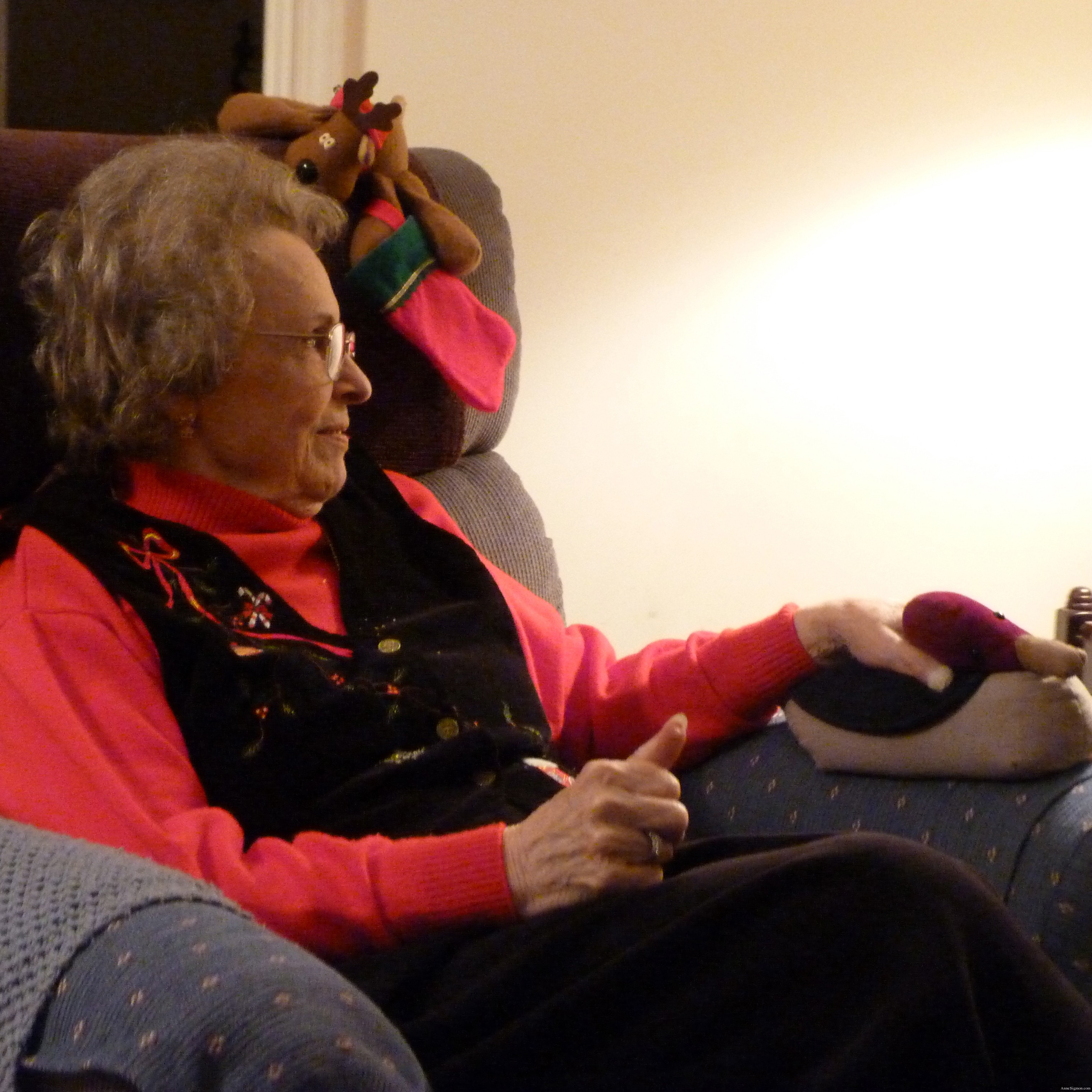
As herMom at erlectric piano voice aged, she resisted singing in public. But she still sang—beautifully—for the family, especially at Christmas, her signature carol, “Come to the Stable.”

In one of my last memories of her, two weeks before she died, she sat at her piano playing a hymn and singing silently along.
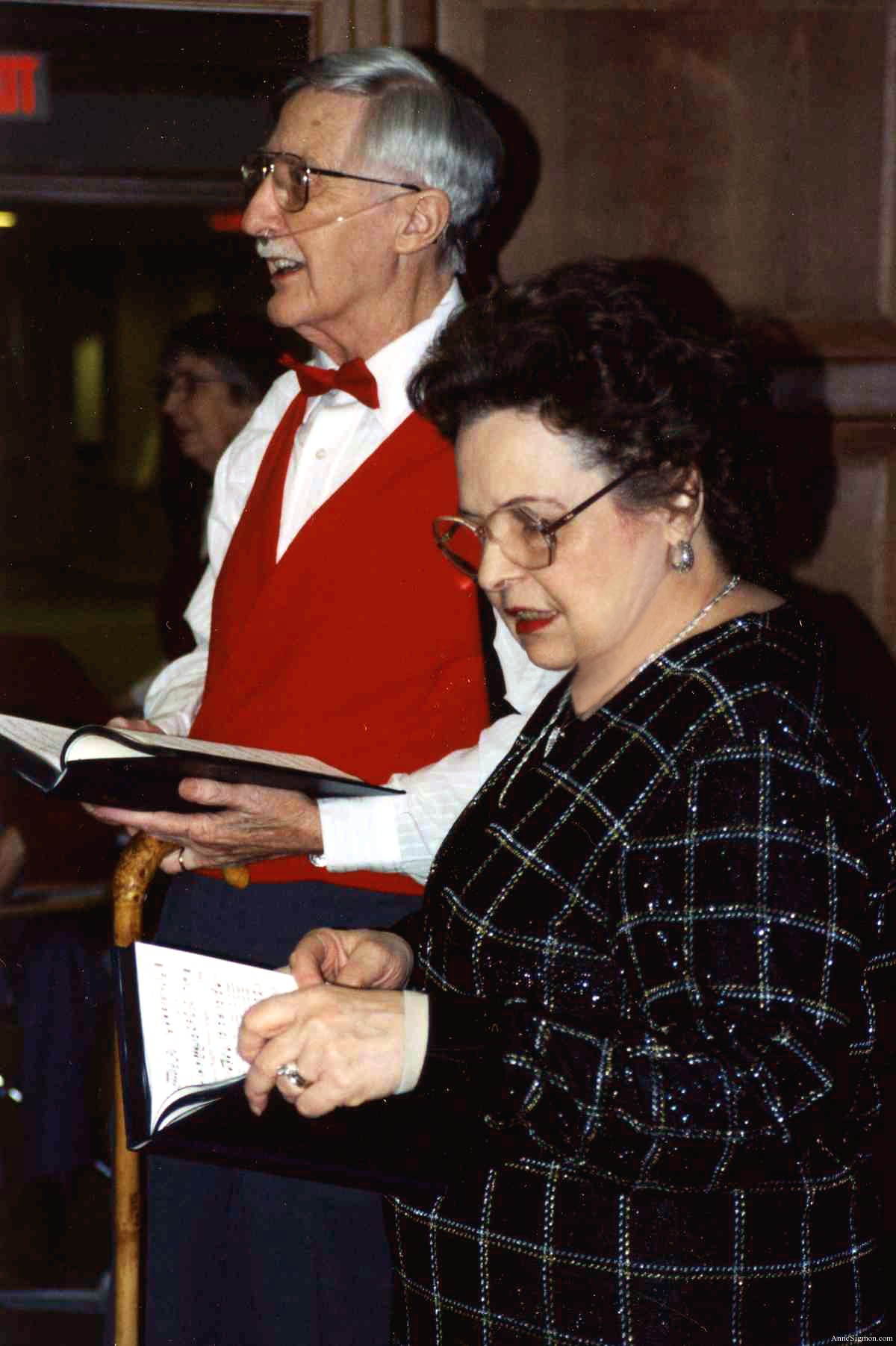
Mom & Dad sing xmas 96 220AP


Now she’s singing with the angels. And I bet she’s got her pitch pipe to make sure they stay in key. Daddy’s sitting in the congregation smiling up at her, like always. There they are, together, forever.

God bless, we love you both.

Lupus patients: New study shows that antiphospholipid antibodies can complicate health

A recen6 ss wolf's eye-smt study conducted in Hungary has found that Lupus patients who also have antiphospholipid syndrome (APS)—or who are positive for aPL antibodies even without an APS diagnosis—face added health risks unrelated to blood clots.

APS increases the risk of blood clots that can cause miscarriage, deep vein thrombosis (DVT), pulmonary embolism, heart attack, and stroke.

But the Hungarian study found other other health health complications—such as  haemolytic anaemia, thrombocytopenia and endocarditis— occur more frequently in lupus patients who are aPL positive.

In addition, the study found that lupus patients who have full-blown APS are predisposed to more severe SLE manifestations including pleuritis, interstitial lung disease, myocarditis, nephritis, and organic brain syndrome.

The study was conducted at theDepartment of Rheumatology, University of Szeged, Faculty of Medicine, Albert Szent-Györgyi Health Centre, Szeged, Hungary.

The results of the study were announced in the journal Lupus.

Read more about the study here:http://bit.ly/1gWVIP0


A Merry Christmas to All

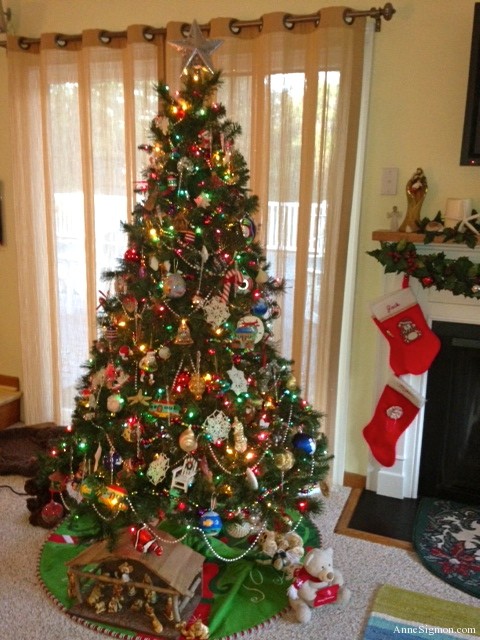
Ellen's christmas tree
My sister, Ellen’s, Christmas tree

Wishing you the simple pleasures of holidays past — sparkling stars above, a crackling fire, and loved ones close by.

Spending time with my family in North Carolina, I’m remembering Christmases past thinking of holidays yet to come.

My take on one Christmas shopping experience, “Sky Shopping,” appears this month on the Southern Sampler Artists Colony e-zine at:

http://bit.ly/1eCIr3g

Merry Christmas to all!

Celebrate the Holidays in Parisian Style this Thursday, Deceber 12, at Alliance Francaise

Eiffel Tower in Winter
America is my country and Paris is my hometown.
Gertrude Stein

Alliance Francaise and the Wanderland Writers will ring in the holidays in style this Thursday, December 12, with une fête de Noël and readings from the new travel anthology Wandering in Paris: Luminaries and Love in the City of Light.

It will be a spirited evening of music, cocktails, hors d’oeuvres, door prizes, and readings. Please join us—the event is free and open to the public.

The readings will visit the enchanting worlds of the Paris Opera; the salons of Thomas Jefferson, Berte Morisot, Gertrude Stein and Anaïs Nin; Paris culture du moment, as well as transplanted cultures ranging from a hammam to a Gorille Blanc.

I’ll be reading along with editors Linda Watanabe McFerrin and Joanna Biggar and other authors including Unity Barry, Antoinette Constable, Kitty Hughes, Laurie McAndish King and Cindy Racicot. Hope to see you there.

If you’ll be in the Bay Area that evening, please join us for delicious bites and delightful tales.

Holiday Party & Book Celebration:

Paris good cover Reading from Wandering in Paris: Luminaries and Love in the City of Light

Thursday, December 12, 6-8 p.m.

Alliance Francaise
1345 Bush Street (between Polk and Larkin)
San Francisco, CA 94109
Telephone: (415) 775-7755

Parking is available across the street at 1340 Bush Street

November 22 Book Party will celebrate new Paris travel anthology

Oh la la, we’ll have Paris in mind on Friday, November 22, when we celebrate the new travel anthology Wandering in Paris with a book party and reading at Montclair’s fabulous bookstore, A Great Good Place for Books.  If you’ll be in the Bay Area that evening, please join us for delicious bites and delightful tales.  The reading is free and open to the public.  I’ll be reading along with editors Linda Watanabe McFerrin and Joanna Biggar and other authors including Cindy Rasicot, Antoinette Constable,  Kitty Hughes, and Laurie McAndish King.  Hope to see you there.

Save the Date:
Paris good cover
Reading and Book Party celebrating publication of the new travel anthology
Wandering in Paris: Luminaries and Love in the City of Light

Friday, November 22, 7 p.m.

A Great Good Place for Books
6120 LaSalle Ave.  (in Oakland’s Montclair Village)
Oakland, CA 94611
Telephone: (510) 339-8210

New Yorker essay shines a spotlight on the scourge of autoimmune disease

Utah 2013 aes  - 080

For autoimmune patients—and I’m one of them—life sometimes feels like a lonely uphill climb:

“getting sick for no good reason, falling prey to esoteric infections and mysterious skin outbreaks, sliding into spells of lethargy and exhaustion that looked so much like laziness it was maddening.”

Excerpt from A Stroke of Bad Luck and the Potholed Road to Recovery

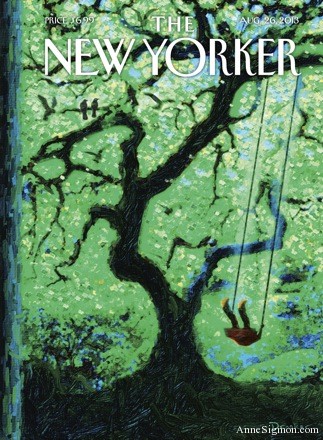
In her essay “What’s Wrong With Me” published in this week’s New Yorker (Aug. 26, 2013), author Meghan O’Rourke shines a spotlight on what it’s like to live with autoimmune disease. Recounting experiences all too familiar to autoimmune patients, and to me, O’Rourke describes:

  • symptoms ranging from hives to migraines, buzzing in her throat, numbness in her feet;
  • terrible fatigue that made her feel like “a mechanism that moved arduously through the world, simply trying to complete its tasks. Sitting upright at my father’s birthday party required a huge act of will.”
  • her brain often “enveloped in a thick gray fog”
  • a susceptibility to viruses (in her case cytomegalovirus, parvovirus, and Epstein-Barr)
  • a family history sprinkled with various seemingly unrelated illnesses that (she learned later) are all autoimmune in nature.


Like many autoimmune patients, O’Rourke rattled from doctor to doctor for years before any of them believed she had a disease.  “Many clinicians assume that the patient, who is often a young woman, is just one of the ‘worried well,’” she writes. Finally, after six years, she had her diagnosis: autoimmune thyroiditis, often called Hashimoto’s, the same disease that plagued my grandmother.

I missed the the doctor-to-doctor crawl because I had no clue that my body was harboring any kind of illness until I was felled by a stroke caused by my particular autoimmune disease: antiphospholipid syndrome (APS).

O’Rourke writes movingly about what it’s like to struggle with a debilitating condition—autoimmunity—that no one, even specialists, understands well.

The lack of knowledge is shocking to me, considering the magnitude of the problem: The American Association of Autoimmune Related Diseases (AARDA) estimates that as many as fifty million Americans suffer from autoimmunity—a greater number than cancer.  


There are somewhere between eighty and one hundred autoimmune diseases, yet “autoimmune disease is as much of a medical frontier today as syphilis or tuberculosis was in the nineteenth century,” O’Rourke writes. “Some researchers say the number of cases is rising at almost epidemic rates.”

At times during the course of searching for a diagnosis and treatment of her illness O’Rourke questioned her own sanity:

  • “Was I going mad?” she asks.
  • “The worst part of my fatigue, the one I couldn’t explain to anyone—I knew I’d seem crazy—was the loss of an intact sense of self.”
  • “To be sick in this way is to have the unpleasant feeling that you are impersonating yourself.”


“It was a struggle,” she writes, “to do anything—to teach my class, to tidy the house, to go to the gym. My joints hurt, my neck hurt; I had nosebleeds and large bruises up and down my legs. I spend hours everyday unable to work …” This situation is all too familiar to me and other autoimmune patients.

Like many who suffer from autoimmunity, O’Rourke found information and solace in on-line support groups, “people, rich and poor, who were connected by one thing: the inability of doctors to alleviate their symptoms.”   She also turned to diet hoping to mediate her disease. She followed a diet similar to the so-called Paleo regimen: “no gluten, no refined sugar, little dairy” so strictly that, while it did ease some of her symptoms, she spent “at least half of each day” shopping for food, eating, and cleaning up.

“What I had wasn’t just an illness now; it was an identity, a membership in a peculiarly demanding sect. I had joined the First Assembly of the Diffusely Unwell …”

But O’Rourke realized that she didn’t want her life to be defined by illness.

Echoing the concern of many autoimmune patients, she writes: “I worried that I would no longer have friends.”

“The chronically ill patient has to hold in mind two contradictory modes: insistence on the reality of her disease, and resistance to her own catastrophic fears.” Amen to that.

CV1_TNY_08_26_13Drooker.inddO’Rourke’s thoughtful essay has much more to say about autoimmune disease and her experience.  Anyone concerned about the scourge of autoimmunity should read it.  If you’re not a New Yorker subscriber, you can find this issue at newsstands this week, or order a single copy from The New Yorker here.

Two Evenings in Paris—by San Francisco Bay

Paris good coverIf you’re in the Bay Area, come join us as the Wanderland Writers debut the new anthology Wandering in Paris: Luminaries and Love in the City of Light.

We’ll celebrate the book’s publication at two festive launch parties sponsored by Left Coast Writers:
— Monday, August 12, 6 pm at Book Passage at the San Francisco Ferry Building.
–Saturday, August 17, 7 pm at Book Passage Corte Madera.

I’ll be reading along with other contributors. Come join us for good stories, wine, and, of course, a certain je nais se quois.

For a preview, take a look at the travel e-zine Wanderlust and Lipstick.One of my stories from the book, My Phamtom of the Opera, is currently featured there.

http://bit.ly/11K0EU3

New Brain Stimulaion Technique May Help Stroke Survivors with Aphasia

Utah 2013 jbm  - 195 - Version 2Aphasia—difficulty speaking and remembering words or names—is one of the most vexing aftereffects of stroke and other types of brain damage. Aphasia can also affect the ability to listen, read, spell, and work with numbers.

After my stroke, I couldn’t remember my husband’s name or how to call 911.

Every sentence was a struggle: to remember names, to find words—ordinary words for ordinary objects like “car” or “bookshelf” or “school.”

Marilyn (my speech therapist) explained what had happened to my speech and memory for words. “Your inability to remember names or think of words is called aphasia,” she told me.

Excerpt from A Stroke of Bad Luck and the Potholed Road to Recovery

Today, twelve years after my stroke, I’ve recovered well. Most people I meet can’t tell I’ve had a stroke.  But though I live almost normally, I still have problems with aphasisa. Every day it’s something different. Yesterday, I met with a friend who is helping me with my website. As she talked and I took notes, I stopped. Looking up at her, feeling puzzled and embarrassed, I said, “I don’t remember how to to spell ‘health.'”

Now researchers are testing a new technique of non-invasive brain stimulation that may help stroke survivors recover more language function earlier in the recovery process. It’s called transcranial magnetic stimulation (TMS) and involves a coiled, magnetic device that’s pressed to the patient’s head.   The device delivers magnetic pulses that reach the brain.

I imagine looking like a martian woman at the beauty salon for a color weave!

A new study by researchers at McGill University in Montreal combined TMS brain stimulation with traditional speech and language therapy for stroke survivors. Patients who received both had an average thirty percent greater improvement over those who received traditional therapy alone.

“For decades, skilled speech and language therapy has been the only therapeutic option for stroke survivors with aphasia,” said Alexander Thiel, M.D., the study’s lead author.  “We are entering exciting times where we might be able in the near future to combine speech and language therapy with non-invasive brain stimulation earlier in the recovery. This could result in earlier and more efficient aphasia recovery and also have an economic impact.”

That’s welcome news for all of us who suffer aphasia.

Find more information about the study here.

Travel Writing Takes Center Stage at Left Coast Writers this Saturday night, June 8

Hear some great travel stories this Saturday night and perhaps win a prize for a piece of your own.
Left Coast Writers presents Our Favorite Travel Writers this Saturday, June 8, at 7 pm in the gallery at Book Passage Corte Madera store.

We’ll share stories and wine and the company of fellow traveling writers. There will even be a contest for the best travel story (1000 words or less), so bring your submissions. The winning story will receive a cash award and publication in the Left Coast Writer online column, Roadwork. But you must be present to win, so mark your calendars.

I’ll read a story from my memoir-in-progress, A Stroke of Bad Luck and the Potholed Road to Recovery.  It recounts my introduction to adventure travel. Hint: I didn’t have to travel far to find more adventure than I bargained for.


Other readers include Cheryl Armstrong, Unity Barry, Antoinette Constable, Kate Crawford, Laurie McAndish King, Diane LeBow, MJ Pramik, and Cindy Rasicot.

Hope to see you there.

Location: Book Passage Corte Madera Store.

51 Tamal Vista.
Phone: 415-927-0960

Genetic Basis Identified for Type of Migraine That Increases Stroke Risk

A research team at the University of California, San Francisco (UCSF), has identified a genetic mutation that is strongly associated with a typical form of migraine headache—migraine with aura.  The research “puts us one step closer to understanding the molecular pathway to pain in migraine,” according to Louis J. Ptáček, senior investigator on the study and a professor of neurology at UCSF. “And, as we come to a clearer understanding, we can start thinking about better therapies,” he said.

The mutation is in the gene known as casein kinase I delta (CKIdelta). You can read more about the research here.

Could that mean that, one day, genetic testing can help identify people who are at increased for stroke? I hope so. I was one of them

I suffered from relatively mild migraines for twenty years before I had a stroke. Though mild, my migraines were the type of migraine the UCSF study describes: with “aura,” that strange visual disturbance that always preceded the headache—blind spots,  zigzag lines or flashing dots that seemed to pulse before my eyes. Once I saw the aura, the rest would be only minutes behind—the pounding headache, over-sensitivity to light and sound, sometimes nausea. I knew women who had migraines so severe they had to stay home from work and retreat to a dark room in agony. Fortunately mine weren’t that bad.

But—though I didn’t know it at the time—even these mild migraines put me at significantly increased risk for stroke.

Women who suffer from migraines with aura (visual disturbances such as flashing dots or blind spots) can be up to ten times more likely to suffer a stroke, depending on other risk factors, according to Dr.  Steven J. Kittner, professor of neurology and director of the Maryland Stroke Center, University of Maryland School of Medicine.

Migraine is also one of the symptoms of the clotting disorder that caused my stroke, an autoimmune disease I never knew I had until I was slammed by a stroke at forty-eight years old. It’s called Antiphospholipid Syndrome or APS.  APS is also sometimes called “sticky” blood because it makes the blood “thicker” and more prone to clots. After my stroke more than ten years ago, I was put on blood thinners for life. I haven’t had a migraine since. It almost seems to me like the headache signaled my sludgy blood struggling flow through my brain. Until it got stuck and formed a clot that caused a stroke that reordered my life.

I want to get the word out about migraine. If you have them, you’re at increased risk for stroke. Do your brain a favor: evaluate any other risks for stroke you have, and try to reduce them.

Risk factors are cumulative,” Dr. Kittner adds.  “Reducing even one risk can greatly lower your chances of having a stroke.”

Read more about the risk factors for stroke here in this list from the National Stroke Association.