When a Smashed Bottle is Cause for Gratitude: 17 years After Stroke

Yesterday, as Jack & I were finishing a late brunch, I glanced at the paper. January 30. My stroke anniversary date — seventeen years since my life was upended by stroke and antiphospholipid syndrome (APS), the nasty autoimmune disease that turns my blood to sludge.

Back then, it felt like my life was over. I never would have guessed I had even seven years left, much less seventeen. I fought brain fog, fatigue, a shredded memory, attention deficit, garbled speech. Because my right hand has almost no feeling, I couldn’t type or tie my shoes, or turn a key in the lock. I lived on a tightrope, dependent on high doses of blood thinner to prevent another stroke but with the constant threat of bleeding.

I grieved not just the loss of capability, but the loss of myself. After a year, I could no longer remember who I’d been before.

But slowly, with time and therapy—and much hard work—I regained some of the capabilities I lost. I cultivated some new qualities, chief among them greater patience with myself. With Jack’s help, and the optimism learned from my father, I found the grit to travel off the beaten path. I found the courage to feel lucky, to tamp down the fear that life-threatening accidents lurked around every corner.

Yesterday, when I realized what day it was, I sat at the breakfast table and gave thanks for the marvels of those seventeen years. Walking the floor with four new grandchildren. Standing soaked in the mist and awe of Brazil’s Iguaçu Falls. Basking in the silence of a dervish’s dance. Celebrating twenty-five years and more than fifty countries visited with with Jack. Finding time and voice to write.

I took a breath and a long, calm moment to feel grateful on that, the anniversary of one of the worst days of my life.

Back to reality, I cleaned off the breakfast table. Jack had cooked, so it was my turn to do dishes. I carried the condiments to the kitchen counter next to the refrigerator. Reaching into the refrigerator with an almost-full bottle of salsa, I looked away for just a moment, forgetting to use my eyes to see what my hand cannot feel. That’s when the bottle slithered from my grasp and exploded on the tile kitchen floor.

The sudden thunk, the splat, the flying tomato gore, chunks and shards of glass sailing all the way into the dining room.

Micro pieces of glass as fine as sand were everywhere, even stuck to the bottom of my shoes. There followed the conundrum of “how to clean up glass while on blood thinners.” The answer, of course: very slowly and carefully—with lots of paper towels and help from Jack and his powerful shop vac.

With the mess finally cleaned up, I headed to my office to work. My cell phone rang, a doctor’s office. I noticed the time: 2:10 pm.

A woman’s voice: “I had you down for an appointment at two o’clock.”

Me: “Oh, I think there’s a mistake. I am sure I made that appointment for Wednesday.”

Her: “Yes. Today is Wednesday.”

I looked up, for a moment as lost in brain fog as I’ve ever been.

Even after seventeen years, some things can’t be fixed.

All I can do is chose to live in gratitude for what remains. And I do.

Why You Need to Know about Antiphospholipid Syndrome—APS

burgundy_ribbon 2 enhancedWhen I was diagnosed with antiphospholipid syndrome in 2002, I  felt like I’d fallen into a bad sci-fi movie. I’d never heard of APS; even most of my doctors had never heard of it. I had a hard time finding information about it. There was no “national society of …” The best source of information I found was NORD—the National Organization for Rare Disorders.

Although APS is still listed in the NORD system, it turns out that APS really isn’t rare. At the time, 16 years ago, it wasn’t very well known. But research and increased awareness have greatly expanded our understanding of APS.

The reason you should care is simple:

Antiphospholipid Syndrome—APS—is dangerous and much more common than first thought.


It’s now estimated that one to five percent of the general population has APS.

That’s about two to six million women in the US, comparable to the number of women living with cancer.

There is now an organization, The APS Foundation of America—founded in 2005—that promotes antiphospholipid syndrome education, public awareness, research, and patient services.

These statistics from the APS Foundation of America demonstrate the seriousness of APS as a health problem—particularly, though not exclusively—for women:

  • APS is the No. 1 cause of strokes in young people.
  • One third of strokes occurring in people under 50 are due to APS.  Mine was one of those.
  • Estrogen in the form of birth control pills and hormone replacement–perfectly safe for most women–can be deadly for women with APS.
  • 20% of blood clots in large veins (deep vein thrombosis, including pulmonary embolism) are caused by APS.
  • 10-25% of women with recurrent miscarriages have APS.  If properly diagnosed and treated, many of them will be able to deliver healthy babies. That was not the case in years past. Undiagnosed APS is  the reason I was not able to have children.
  • APS is a major women’s health issue: 75-90% of those affected by APS are women.


The hallmark of APS is a tendency for blood clots to form when they shouldn’t. Patients who’ve had repeated blood clotting episodes should ask their doctors about testing for APS.

Learn more about antiphospholipid syndrome on my APS resources page.

But if you or someone you love has APS, don’t despair. APS is treatable, primarily with drugs like aspirin, Coumadin (generic warfarin), and other blood thinners.

Related Posts:


Coming up:

  • APS symptoms
  • How APS is diagnosed
  • How APS is treated
  • Resources for APS patients
  • Blood thinning: it’s more complicated than it looks
  • Living with Coumadin
  • Why I rejected the new blood thinners like Xaralto.


The Edge of My Mind: Where I Stand 16 Years After Stroke


FOG SS_186908249It’s happening again. I’m at the edge of my mind, teetering toward the void of missing synapses, staring into the white fog of absence. Of absent memory, yes. But it’s more than that: it’s an absence of self. I feel my self slipping, like a hiker on a mud-slimed path. I balance on the far edge, lean back, beg my mind not to fall into the void—again.

In reality, I’m standing at the refrigerator door, looking at the object in my hand, an everyday object, something I want to cook. But I don’t know what it is. I think, trying to summon the information. Think, think, think. Nothing.

This is what stroke does. Still, after 16 years and a near-miraculous recovery.

After my stroke, I couldn’t remember my husband’s name or how to dial 911. I couldn’t control a fork to feed myself, couldn’t comb my hair, tie my shoes, or button a shirt. I couldn’t recite the alphabet or say what I wanted.

I was one of the lucky ones. Today I can do all of these. But I still can’t work in my profession of marketing and communications. (I don’t think fast enough, write fast enough, react fast enough, work fast enough.) I can’t calculate a tip in a restaurant or balance a checkbook. I often stutter and stumble when I talk, forget tasks, appointments, names, faces. Standing at the coffeepot, I can’t remember that my husband, thirty seconds ago, asked for just half a cup. And now, forgetting his coffee entirely, I carry the object in my hand into the den and ask him, “what is this?”

He looks up, startled, then answers: “asparagus.”

Yes, of course.

Still, some sixty or more percent of stroke survivors would trade places with me in a second.

Like me, they are unable to return to work. But unlike me, most of them can’t drive, type, articulate, live almost normally in the world. Many still—months and years after a stroke—can’t walk without assistance, can’t feed or dress themselves.

Yes, I am lucky and I know it. But still ….  My stroke was caused by an autoimmune clotting disorder called antiphospholipid syndrome (APS). This means that my own risk of a repeat stroke is very high, around 60-70%, experts say.  Each time I totter on the abyss I wonder, like feeling the beginning of a temblor in earthquake country: is this it? Is this another big one?

Don’t let stroke happen to you or someone you love.

Eighty percent of strokes can be prevented. May is Stroke Awareness Month. What better time to learn the risk factors for stroke and share them with someone you love?

Learn more about stroke:

Autoimmune Disease: When Flares Get You Down

Anne w Piccolo sad V2
Some days you just feel like life’s going to the dogs


I prefer to live with autoimmune disease and the aftereffects of stroke by staying positive.

  • I try to remember that I’m lucky to have recovered as much as I have. “Focus on what you have, not what you’ve lost,” I tell myself.
  • A certain amount of pain and fatigue are just part of my life now. I try to push through the minor stuff and keep living my life.
  • The company of friends and family is like at tonic to me. I try to keep dates, even when I’m tired or feeling less than well. Friends are usually happy to make some adjustments—a closer restaurant so I don’t have to drive so far, a ride if I don’t feel like driving, a movie instead of a hike.
  • To me, purpose is one of the best medicines: making a call, sending a card, an email or small gift to someone who needs it; doing a favor; writing a story or sharing information that might help someone—these help take my mind off my own limitations.
  • I try to rest when I’m overtired, and reign in my tendency to schedule too much, sleep too little, and turn to chocolate (sugar—BAD!) when I’m stressed.


But, as anyone with autoimmune knows, sometimes none of that is enough.

When my autoimmune disease—APS (antiphospholipid syndrome)—has flared …

I’ve been through weeks of crackly, aching joints, of pinching-pounding-stabbing along my spine … weeks of wanting to crawl back into bed after the simple effort of a morning shower … Itching red rashes and blue-veined legs—just a typical autoimmune “flare” courtesy of my particular disease, APS.

And, when life slings machetes at my friends and family at the same time—and there’s been far too much of that this year)—well …

 I  feel like it’s raining toads … like life’s going to the dogs.  I want to turn off the phone, hide under the covers, and scream. 

Sometimes I  do a little of that. Or vent on Facebook or in my blog.  But ultimately, I  get out of bed, attack the overdue work pile, admit that I can’t do it all, make apologies for late commitments, cancel some things that just can’t be done, and see to helping my loved ones who are taking it on the chin.

It’s usually this last part—trying to be there for someone I love—that’s the most healing step of all.

Hospital PICC IVs can pose blood clot risks

dreamstime_m_8861228Check in to a hospital, whether for illness or tests, and an  IV is almost sure to appear. They’re everywhere, delivering fluids and potentially live-saving drugs to patients.

The “normal” IV, called an  intravenous catheter, delivers medicines into a vein near the skin surface.  It can be safety left in place for 3-4 days.

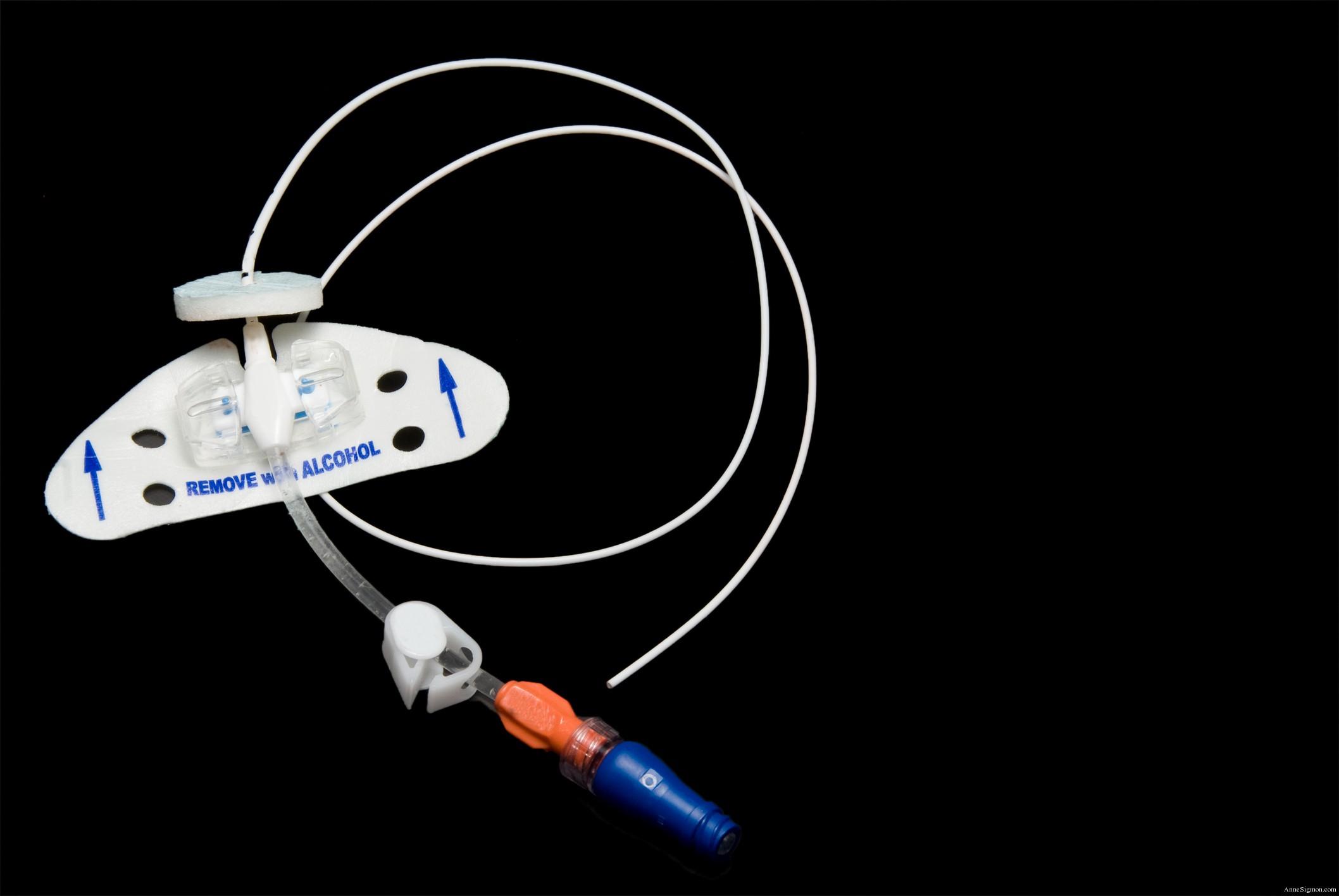
If the treatment must go on for longer—for example, chemotherapy or long-term antibiotic or cancer treatment, hospital sometimes use a PICC line (peripherally inserted central catheter), photo above. With proper care, the PICC line can be left in place for months.

According to Vineet Chopra, University of Michigan assistant professor of Internal Medicine and a leader of a recent study, PICCs are much easier to use than normal IVs. Because PICCs can stay inserted for longer than other IVs, Chopra said patients can go home with them, resulting in less time in the hospital and added convenience for the patient. Furthermore, PICCs can reach all the way to the heart, whereas normal IVs end in the arm.

But PICC lines pose a risk for blood clots that can be especially severe for patients who have already had clotting problems.

In a recent study by the University of Michigan, almost 30 percent of patients with PICC lines developed blood clots. Patients who had any kind of surgery during their hospital stay, or had had any kind of deep clot in their medical history, were more likely to get a DVT (deep vein thrombosis) associated with their PICC.

The results, says Chopra, suggest that doctors should use PICCs only when they really need them – and that they should tread carefully when considering PICCs for certain patients, monitor for clots, ensure patients continue taking aspirin and statins that they were already on, and take the PICC out before any operation.

Patients should feel empowered to ask what kind of IV device they’re getting, and what risks it carries, before one is placed, he says. Once a patient has a PICC, it’s important that they know what symptoms might indicate they have a clot – and to ask when the PICC can come out.

I’m glad to know this. As an APS patient with a history of blood clot in the brain, I want to reduce my risk of clots any way I can. That means avoiding PICC lines unless they’re absolutely mandatory. And if  I’m ever forced into a PICC line, I’ll know to make sure my medical team is extra vigilant in clot prevention.

For more information about the University of Michigan Study, look here: http://bit.ly/1FMyo6I


Twelve tips for preventing blood clots

Papua New Guinea: The Mt. Hagan Show

Sometimes it seems like blood clots rule my life. It was a clot that caused my stroke in 2002, precipitated by the autoimmune clotting disorder antiphospholipid syndrome (APS).

APS has a nasty tendency to “re-thrombose” — that’s the medical jargon I read, soon after my stroke, telling me  I was highly likely to have another.

My first defense is taking the blood thinner Coumadin (warfarin) — for life, all my doctors have insisted. I take their advice.

I also look for other ways to discourage blood clots. Here are twelve tips worth knowing.

12 tips for preventing blood clots:

  1. Maintain an active lifestyle and exercise regularly — daily, if possible.
  2. Maintain a healthy weight
  3. Eat a healthy diet.
  4. Don’t smoke
  5. Get your blood pressure checked regularly; take steps to lower it, if necessary.
  6. Report any family or personal history of blood-clotting problems to your doctor. If, like me,  you’re at high risk, you may need to consider medications to prevent clots.
  7. Discuss alternatives to birth control pills or hormone-replacement therapy with your doctor.
  8. If you are on an airplane for more than four hours, either walk or do leg stretches in your seat. Drink lots of water while flying and avoid alcohol.
  9. If you are at special risk for clots, consider compression socks. I use them whenever I fly long distances. I found—to my great surprise—that I actually like them. I call them “happy feet.”
  10. During pregnancy, ask your doctor what you can do to help prevent clots.
  11. With your doctor, develop clot-prevention strategies for any surgical procedure that will last more than an hour.
  12. Cancer patients are especially prone to blood clots. If you have cancer, talk to your doctor about making blood clot prevention an integral part of your treatment plan.


For further information:

Seven Simple Lifestyle Steps May Decrease Risk of Blood Clots

On the alert for deep-vein blood clots 

Cancer and Blood Clots: a complicated connection


What the *^## is Antiphospholipid Syndrome–APS?

I felt like the doomed heroine of a bad sci-fi flick, zapped by zeta rays from planet Krypton when, a few weeks after my stroke, I first heard my unpronounceable, incomprehensible diagnosis: ‘antiphospholipid syndrome.’ I’d never heard of APS. Nobody I knew had ever heard of APS, even most of my doctors had never heard of APS. Many of them still havn’t.   Excerpt from Anne’s memoir

Anne AS log min text rev 3APS is sometimes called “sticky blood” because it causes an increased tendency to form blood clots in the veins and arteries. Clotting can lead to serious health complications ranging from miscarriages and migraine headaches to blood clots in the legs, in the lungs, heart attacks or, in my case and many others’, stroke.

Here are some important facts about Antiphospholipid Syndrome:

  • APS is a blood clotting disorder that causes the blood to clot when it shouldn’t.
  • It does this by signaling the immune system to make antibodies to attack blood proteins called phospholipids (phos-pho-lipids). These proteins help moderate the body’s natural blood-clotting process so it stops when it should. Thus the name: anti (against) phos-pho-lipids.
  • I think of it this way: the APS antibodies are like out of control PacMen, dashing through my blood gobbling up the good little minions who help put the brakes on my clotting system.
  • In the UK, APS is called Hughes Syndrome, named after Dr. Graham Hughes, the professor and Lupus specialist who first described APS in 1983. I rather wish we called it Hughes Syndrome in the US, too. It’s a lot easier to learn and think about something I can pronounce.APS awareness month stamp
  • APS is a common cause of miscarriage, blood clots in the legs (deep vein thrombosis), the lungs (pulmonary embolism), the heart (heart attack), and the brain (stroke).
  • APS is also an autoimmune disease, because the antibodies that attack our blood proteins are attacking parts the ‘self’ instead of invading organisms like virus and bacteria.
  • Like lupus and other autoimmune diseases, APS can “flare” at times, causing weakness, fatigue, achy muscles and joints, especially when we’re tired or stressed.
  • Because most patients with APS take some kind of bloodthinner, we must try hard to avoid bleeding accidents. For some of us, this is one of the most vexing aspects of the disease: walking a line between blood that’s so “thick” it causes clots, or so “thin” it causes abnormal bleeding.
  • APS is sometimes found in conjunction with other autoimmune diseases, particularly lupus.  It’s estimated that 50% of Lupus patients also have APS. (Johns Hopkins Lupus Center)
  • APS can also occur on its own. This is called primary APS.


Learn more about antiphospholipid syndrome on the APS resources page.

Coming up—Information on:

  • APS symptoms
  • How APS is diagnosed
  • How APS is treated
  • Clearing up confusion about APS: Questions I frequently hear from other  patients
  • Resources for APS patients
  • Blood thinning: it’s more complicated than it looks
  • Living with Coumadin
  • Why I rejected the new blood thinners like Xaralto.


Blood clots can kill. Know your risks and manage them.


Blood clots are no joke.

The toll is staggering: More than two million people in the US suffer serious blood clots each year, from deep vein thrombosis (DVT), pulmonary embolism (PE) or stroke.

Almost half a million of them die.

The most important way to protect yourself is to know your risks and manage them.

I had no idea I was at risk for blood clots until I had an ischemic (caused by a clot) stroke. Even as it happened, as the paramedics and the neurologist were telling I was having a stroke, I knew they were wrong:

Of course I’m not having a stroke, I wanted to tell him. Strokes are for the elderly, for smokers, for overweight couch potatoes. I’m forty-eight years old, fit, and perfectly healthy. But the words were trapped in my head.

Excerpt from Scrambing Back

I was the one who was wrong that day. I was fit, but I had several risk factors for blood clots that had never crossed my mind.

The first step in preventing blood clots is to know your risk.

Risk factors for blood clots:

  • Being over 60 years old
  • Having cancer
  • Obesity, especially with a BMI (body mass index) of 30 or more
  • Dehydration
  • Thrombophilia —any a condition that causes your blood to clot more easily than normal. Common causes of thrombophilia include:
    — genetic mutations such as Factor V Leiden, prothrombin 20210, or protein C or protein S deficiency
    — Acquired blood-clotting disorders such as antiphospholipid syndrome (APS)
    — High levels of homocysteine in the blood
  • Health problems such as heart disease, lung problems, or a serious infection
  • Having an autoimmune disease or another inflammatory condition
  • Personal history of blood clots: deep vein thrombosis (DVT),  pulmonary embolism (PE),  or stroke
  • Family history of blood clots
  • Taking birth control pills containing estrogen
  • Using hormone replacement therapy (HRT)
  • Varicose veins with phlebitis (inflammation)
  • Being pregnant or having given birth within the past 6 weeks
  • Being less mobile than normal, especially if you move around very little for more than 3 days
  • Having abdominal surgery or surgery for an inflammatory condition
  • Having any surgery that lasts more than an hour and a half, or more than an hour if it involves your legs or pelvis.

Learn more about the risk and prevention of blood clots here:

Mayo Clinic: Risk Factors for DVT  and Risk Factors for Pulmonary Embolism

Lund University: Increased risk of blood clots on the lung (PE) for patients with autoimmune diseases

Clot Connect, sponsored by the Hemophilia and Thrombosis Center at the University of North Carolina at Chapel Hill: Symptoms, Risk Factors and Prevention

APS Foundation of America:  Risk Factors for DVT

Prevent DVT.org: Assess Your DVT Risk

Coming next week on AnneSigmon.com: Strategies for preventing blood clots

My Introduction to Antiphospholipid Syndrome

EDITED APS living with


My experience with Antiphospholipid Syndrome—APS—began thirteen years ago with the cataclysm of a stroke. As the new year opened, I was 48 years old and the picture of health: a trim, fit, non-smoker with perfect blood pressure and no obvious risk factors any disease I knew of. I had a challenging consulting practice in marketing and public relations.  My grandparents and great-parents had lived to healthy old age; I imagined that would be my future, too.

Then—out of the blue—I was slammed by a full-on a stroke. On that eerie morning when the stroke hit, I was lost in a mental whiteout, unable to remember my address, my husband’s name, or how to dial 9-1-1. I had no idea what was wrong. Alone in the house and profoundly confused, but not yet panicked, I managed to get help by dialing “O” for an operator. The terror set in when I tried to speak and realized my words were nothing but gibberish. My heart thumped. Oh, God. She’s going to hang up. She must think I’m a kid playing with the phone, or a crank, or a drunk. Instead, the operator traced the call and sent an ambulance.

When the paramedic told me he thought I was having a stroke, I thought he was nuts.

Of course I’m not having a stroke, I wanted to tell him. Strokes are for the elderly, for smokers, for overweight couch potatoes. I’m forty-eight years old, fit, and perfectly healthy. Perfectly healthy people don’t wake up one morning and have a stroke. But the words were trapped in my head.

At the hospital, the ER neurologist was also stumped. She’d learned that I was taking birth control pills, which can be a risk factor for stroke. But when all my tests of heart and lung function were normal, she still wasn’t satisfied. Somehow she doubted birth control pills told the whole story.

Three weeks after the stroke, she sent me to a hematologist who, after more blood tests and a very detailed health history, diagnosed Antiphospholipid Syndrome­–APS–on the spot. How? For at least 20 years, he told me, I’d had subtle symptoms that pointed to an autoimmune illness and APS.

As part of APS Awareness Month, here are some topics to be aware of:

  • What is APS?
  • APS symptoms
  • How APS is diagnosed
  • How APS is treated
  • Resources for APS patients
  • Blood thinning: it’s more complicated than it looks
  • Living with Coumadin
  • Why I rejected the new blood thinners like Xaralto.


I hope you’ll check back. And, if you or someone else in your life has APS, I’d love to hear about your experience.


Lupus patients: New study shows that antiphospholipid antibodies can complicate health

A recen6 ss wolf's eye-smt study conducted in Hungary has found that Lupus patients who also have antiphospholipid syndrome (APS)—or who are positive for aPL antibodies even without an APS diagnosis—face added health risks unrelated to blood clots.

APS increases the risk of blood clots that can cause miscarriage, deep vein thrombosis (DVT), pulmonary embolism, heart attack, and stroke.

But the Hungarian study found other other health health complications—such as  haemolytic anaemia, thrombocytopenia and endocarditis— occur more frequently in lupus patients who are aPL positive.

In addition, the study found that lupus patients who have full-blown APS are predisposed to more severe SLE manifestations including pleuritis, interstitial lung disease, myocarditis, nephritis, and organic brain syndrome.

The study was conducted at theDepartment of Rheumatology, University of Szeged, Faculty of Medicine, Albert Szent-Györgyi Health Centre, Szeged, Hungary.

The results of the study were announced in the journal Lupus.

Read more about the study here:http://bit.ly/1gWVIP0